
 wewe
wewe 
On chain signals have become a key part of cryptocurrency analysis, offering insight directly from blockchain activity. Unlike traditional indicators that rely on price alone, these signals reflect real user behavior—how assets move, who is holding them, and where trends may be forming.
For traders and investors, this data adds a deeper layer of understanding to market dynamics.
What Are On Chain Signals
On chain signals are indicators derived from blockchain data such as transactions, wallet activity, and network usage. Because blockchain records are public, these signals provide a transparent view of market behavior.
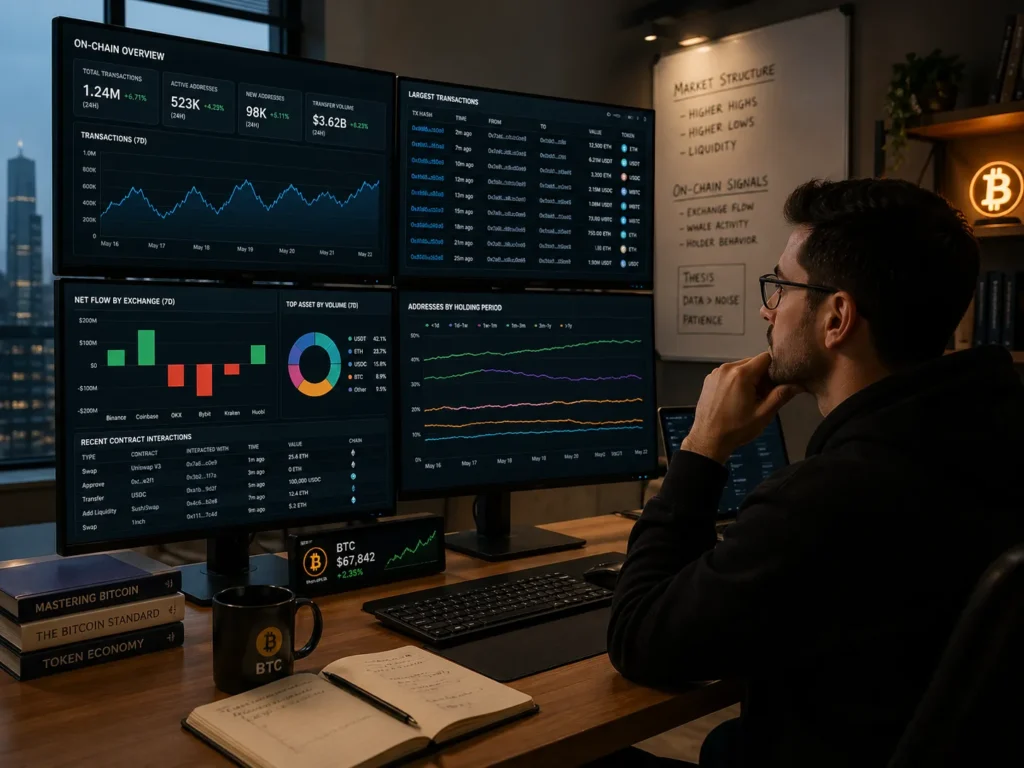
They help answer questions like:
- Are investors accumulating or selling
- Is network usage increasing
- Are large holders moving funds
This makes them especially useful for identifying patterns that may not yet appear in price charts.
How On Chain Signals Work
Every blockchain transaction leaves a trace. Analytics platforms collect and process this data to generate meaningful indicators.
Common steps include:
- Tracking wallet addresses and balances
- Monitoring transaction flows between entities
- Aggregating data into metrics and dashboards
- Interpreting patterns over time
Because the data is continuous, signals can be analyzed in both short-term and long-term contexts.
Key On Chain Signals to Watch
Understanding a few core signals can improve your analysis significantly.
Active Addresses
Measures how many unique wallets are interacting with the network. Growth often suggests increasing adoption.
Exchange Flows
Tracks inflows and outflows between wallets and exchanges. These can indicate potential buying or selling pressure.
Whale Activity
Monitors large transactions from major holders. Sudden movements can signal shifts in market sentiment.
Network Value to Transactions Ratio
Compares market value to transaction volume, helping assess whether an asset may be overvalued or undervalued.
Comparing On Chain and Traditional Signals
| Feature | On Chain Signals | Traditional Indicators |
|---|---|---|
| Data Source | Blockchain activity | Price and volume charts |
| Transparency | Public and verifiable | Market-based |
| Insight Type | Behavioral patterns | Technical trends |
| Timing | Often leading signals | Often lagging |
| Complexity | Moderate to high | Moderate |
Combining both approaches often leads to better-informed decisions.
Pro Insight
The most valuable on chain signals are those that show consistent patterns over time. Sudden spikes may attract attention, but sustained trends tend to provide more reliable insights.
Why On Chain Signals Matter
These signals offer a closer look at how participants behave in the market.
They can help identify:
- Accumulation phases before price increases
- Distribution phases before potential declines
- Shifts in long-term holder behavior
- Changes in overall network health
This makes them useful for both short-term traders and long-term investors.
Factors That Influence On Chain Data
Several factors can affect how signals appear:
- Market volatility
- Regulatory developments
- Institutional participation
- Network upgrades or changes
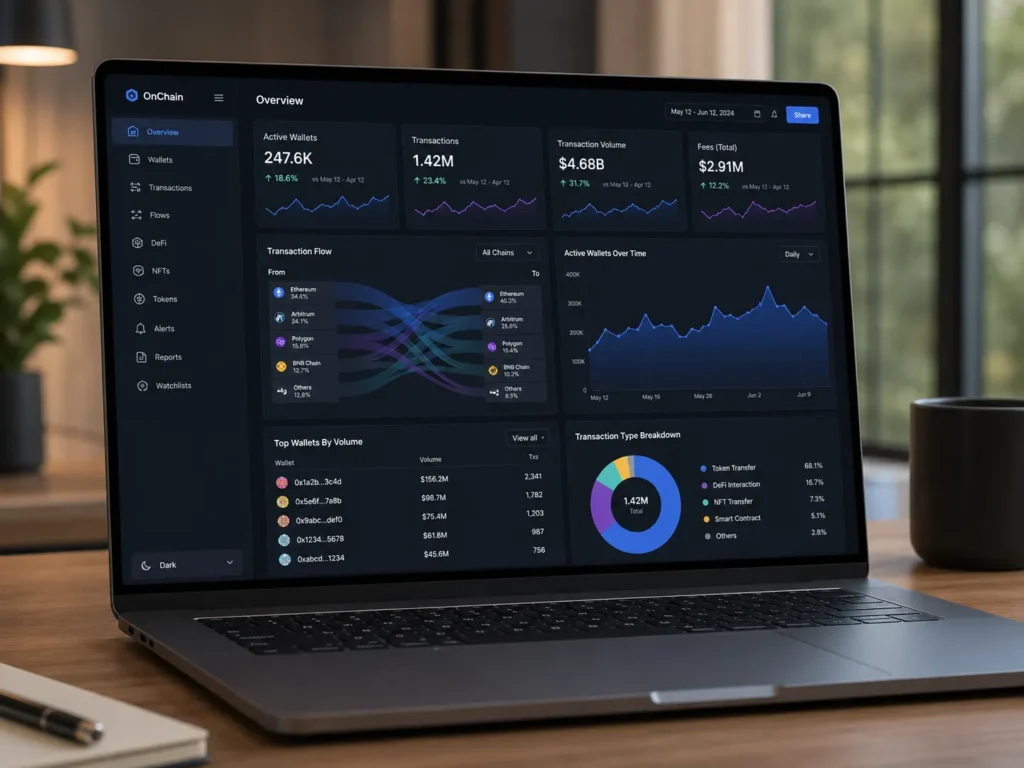
Interpreting signals requires context, as raw data alone does not tell the full story.
Quick Tip
Start with a few key signals—such as exchange flows and active addresses—before expanding your analysis. This helps build a clearer understanding without overwhelming complexity.
Real World Scenario
Imagine a cryptocurrency where:
- Active addresses are steadily increasing
- Exchange outflows are rising
- Whale accumulation is observed
Together, these signals may suggest growing confidence and reduced selling pressure, even if the price has not yet moved significantly.
This layered approach provides more insight than price alone.
Common Mistakes to Avoid
Even experienced users can misinterpret on chain signals.
- Relying on a single metric
- Ignoring broader market conditions
- Overreacting to short-term spikes
- Misunderstanding wallet behavior
Awareness of these pitfalls can improve analysis quality.
Frequently Asked Questions
What are on chain signals
They are indicators derived from blockchain data that reflect user activity and asset movement.
Are on chain signals reliable
They are useful but should be combined with other analysis methods for better accuracy.
Can on chain signals predict price
They can provide early signals, but they do not guarantee future price movements.
What tools are used for on chain analysis
Various analytics platforms track wallet activity, transactions, and market flows.
Are on chain signals only for experts
No, many platforms present data in simplified dashboards suitable for beginners.
Conclusion
On chain signals provide a unique window into the behavior of cryptocurrency markets. By analyzing real blockchain activity, investors can gain insights that go beyond traditional price-based indicators.
When used alongside other tools, these signals can help create a more balanced and informed approach to navigating the market.
https://www.sec.gov
https://www.cftc.gov
https://www.investor.gov
https://www.federalreserve.gov
This article is for general informational purposes only and does not provide legal, financial, medical, or professional advice. Policies, rates, and regulations may change over time.