

 wewe
wewe 
Crypto metrics are the backbone of informed decision-making in digital asset markets. While price often grabs attention, it rarely tells the full story. Metrics provide the deeper context—helping investors understand trends, activity, and potential risks.
For anyone navigating cryptocurrency, knowing which metrics matter can make analysis more structured and less reactive.
What Are Crypto Metrics
Crypto metrics are data points used to evaluate the performance, health, and behavior of a cryptocurrency or blockchain network.

These metrics can come from:
- Market data such as price and volume
- Blockchain activity such as transactions and wallet usage
- Derivatives markets such as funding rates and open interest
Together, they help paint a broader picture beyond simple price movements.
Key Crypto Metrics to Track
Understanding a few core metrics can significantly improve how you interpret the market.
Market Capitalization
Market cap represents the total value of a cryptocurrency based on its current price and circulating supply.
It helps gauge the relative size and maturity of an asset.
Trading Volume
Volume measures how much of a cryptocurrency is being traded over a specific period.
Higher volume often indicates stronger participation and liquidity.
Circulating Supply
This shows how many coins or tokens are currently available in the market.
It plays a direct role in determining scarcity and valuation.
Network Activity
Metrics such as active addresses and transaction count reflect how widely a blockchain is being used.
Growing activity may signal increasing adoption.
Comparing Core Crypto Metrics
| Metric | What It Measures | Why It Matters |
|---|---|---|
| Market Cap | Total value | Size and stability |
| Volume | Trading activity | Liquidity and interest |
| Circulating Supply | Available tokens | Scarcity |
| Active Addresses | User participation | Network growth |
| Transaction Count | Network usage | Real-world activity |
Using these metrics together provides a more balanced perspective.
Pro Insight
No single metric should drive your decisions. Strong analysis comes from combining multiple signals—such as pairing rising volume with increasing network activity—to confirm trends rather than relying on one data point.
On Chain Metrics Explained
On-chain metrics are derived directly from blockchain data. They offer insight into how a network is functioning beneath the surface.
Common examples include:
- Number of active wallets
- Transaction volume on the blockchain
- Large holder (whale) activity
- Exchange inflows and outflows
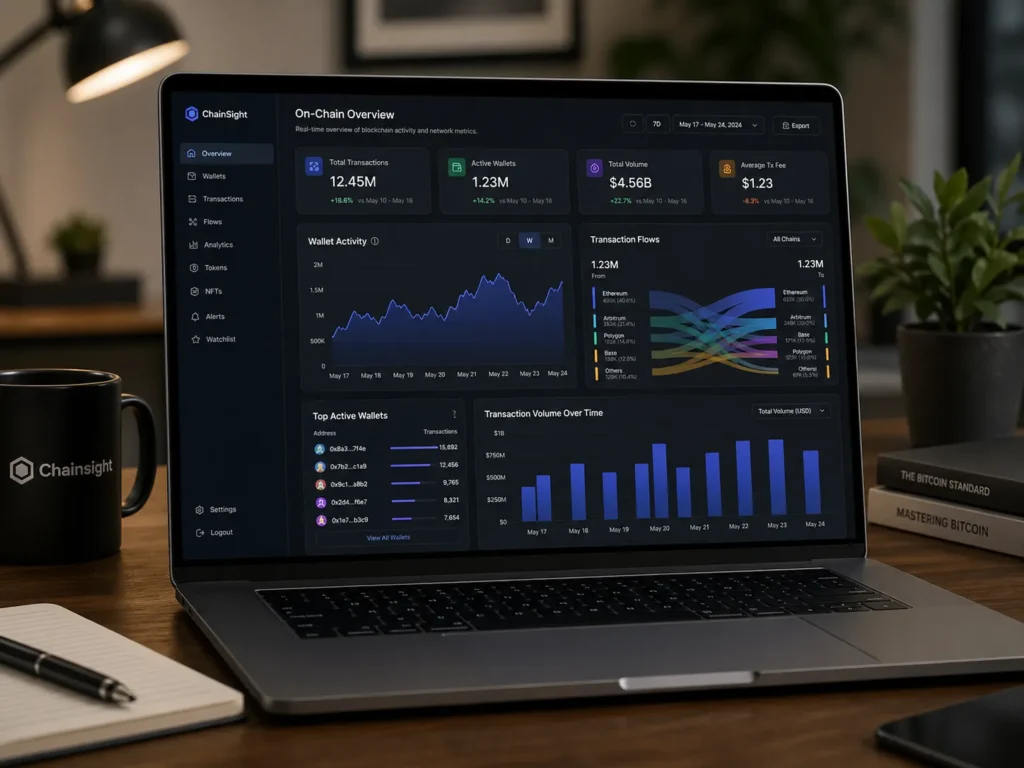
These metrics are especially useful for identifying shifts in behavior that may not yet be reflected in price.
Derivatives Market Metrics
Crypto derivatives markets provide additional indicators of sentiment and positioning.
Important metrics include:
- Funding rates
- Open interest
- Liquidation data
These help traders understand how leveraged positions are building and where potential volatility may arise.
Quick Tip
Start with a small set of metrics and learn how they interact. Adding too many indicators too quickly can make analysis confusing rather than helpful.
Real World Scenario
Imagine a situation where a cryptocurrency’s price is rising steadily.
If trading volume and active addresses are also increasing, this may suggest genuine market interest and broader adoption.
However, if price rises while volume declines, the move could lack strength and may not be sustainable.
This layered approach helps reduce reliance on price alone.
Common Mistakes When Using Metrics
Even useful data can be misinterpreted.
- Relying on a single metric
- Ignoring broader market context
- Misreading short-term fluctuations
- Overanalyzing minor data changes
Recognizing these pitfalls can improve overall decision-making.
Frequently Asked Questions
What are crypto metrics
They are data points used to evaluate cryptocurrency performance, market behavior, and network activity.
Which crypto metric is most important
There is no single most important metric; combining several provides better insight.
Are on-chain metrics reliable
They are useful but should be interpreted alongside market data and external factors.
How do traders use crypto metrics
Traders use them to identify trends, confirm signals, and assess market conditions.
Can crypto metrics predict price movements
They can provide context and signals but do not guarantee future outcomes.
Conclusion
Crypto metrics offer a structured way to understand the complexities of digital asset markets. By moving beyond price and focusing on deeper data, investors can gain clearer insight into trends, participation, and potential risks.
When used thoughtfully, these metrics become valuable tools for navigating an evolving and often unpredictable market.
https://www.sec.gov
https://www.cftc.gov
https://www.investor.gov
https://www.federalreserve.gov
This article is for general informational purposes only and does not provide legal, financial, medical, or professional advice. Policies, rates, and regulations may change over time.