
 wewe
wewe 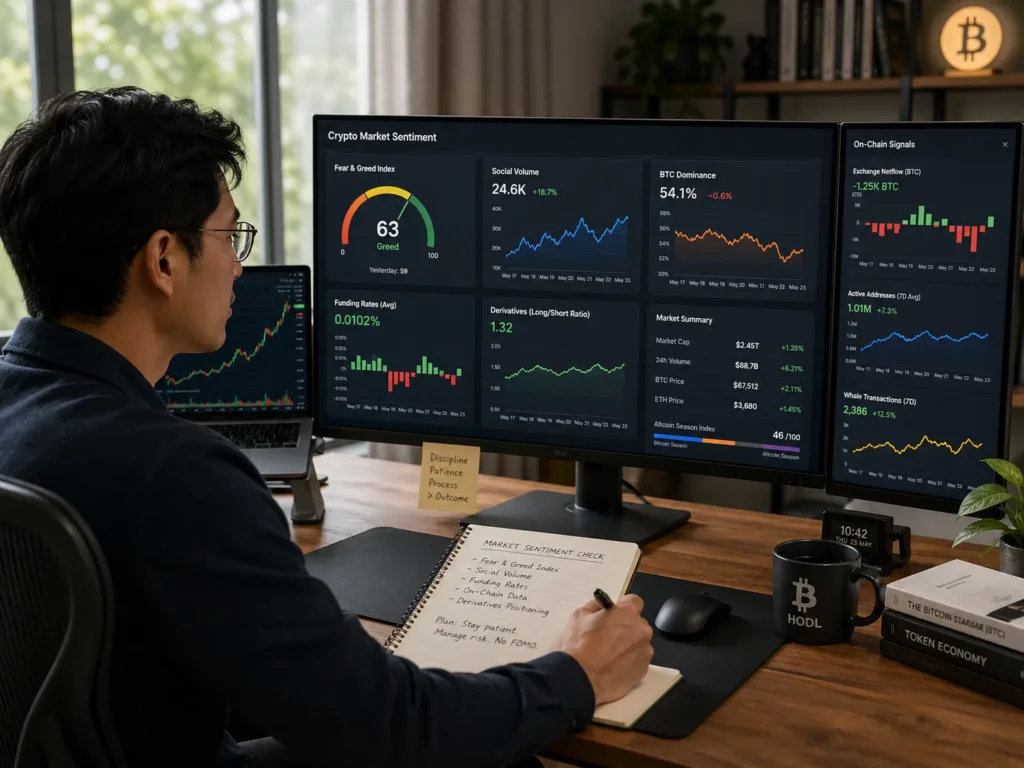
Market sentiment crypto refers to the overall mood or attitude of investors toward the cryptocurrency market. While price charts show what’s happening, sentiment helps explain why it’s happening.
For traders and long-term investors alike, understanding sentiment can provide valuable context—especially in a market known for rapid swings and emotional reactions.
What Is Market Sentiment in Crypto
Market sentiment in crypto reflects whether participants feel optimistic, pessimistic, or uncertain about future price movements. It’s shaped by a mix of data, news, and human behavior.
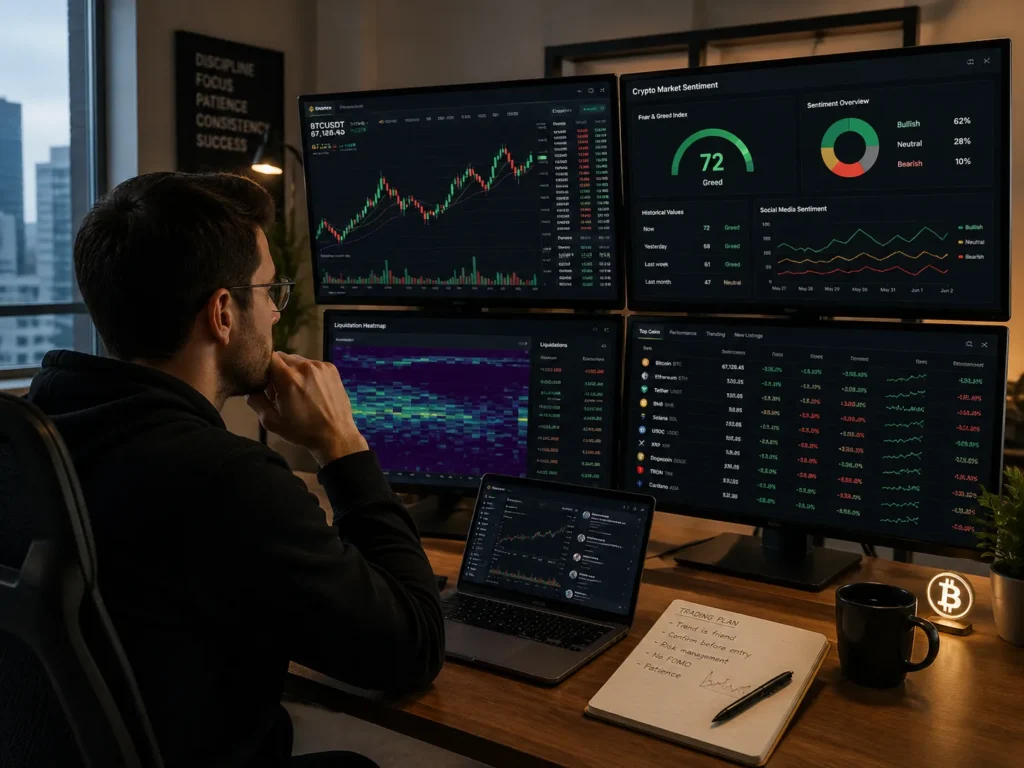
Unlike traditional markets, crypto sentiment can shift quickly due to social media influence, regulatory news, or large investor activity.
Common sentiment categories include:
- Bullish sentiment indicating optimism and expected price growth
- Bearish sentiment reflecting caution or expected decline
- Neutral sentiment where the market lacks a clear direction
How Market Sentiment Is Measured
There’s no single metric that defines sentiment. Instead, traders rely on a combination of indicators and tools.
Some of the most widely used include:
- Price momentum and trend analysis
- Trading volume patterns
- Funding rates in derivatives markets
- Social media activity and engagement
- Fear and greed indexes
Each of these provides a different perspective, helping build a more complete picture.
Market Sentiment vs Technical Analysis
Understanding the difference helps clarify how sentiment fits into trading decisions.
| Feature | Market Sentiment | Technical Analysis |
|---|---|---|
| Focus | Investor behavior | Price patterns |
| Data Source | News, social signals, flows | Charts and indicators |
| Time Horizon | Short to medium | Short to long |
| Interpretation | Context-driven | Rule-based |
| Use Case | Trend context | Entry and exit timing |
These approaches often work best when used together rather than separately.
Pro Insight
Sentiment tends to peak at extremes. When optimism is widespread, markets can become overheated. When fear dominates, opportunities sometimes emerge—but timing remains critical.
Key Drivers of Crypto Market Sentiment
Several factors can quickly influence how investors feel about the market:
- Regulatory announcements
- Macroeconomic trends
- Major exchange activity
- Influencer or media coverage
- Large transactions from institutional investors
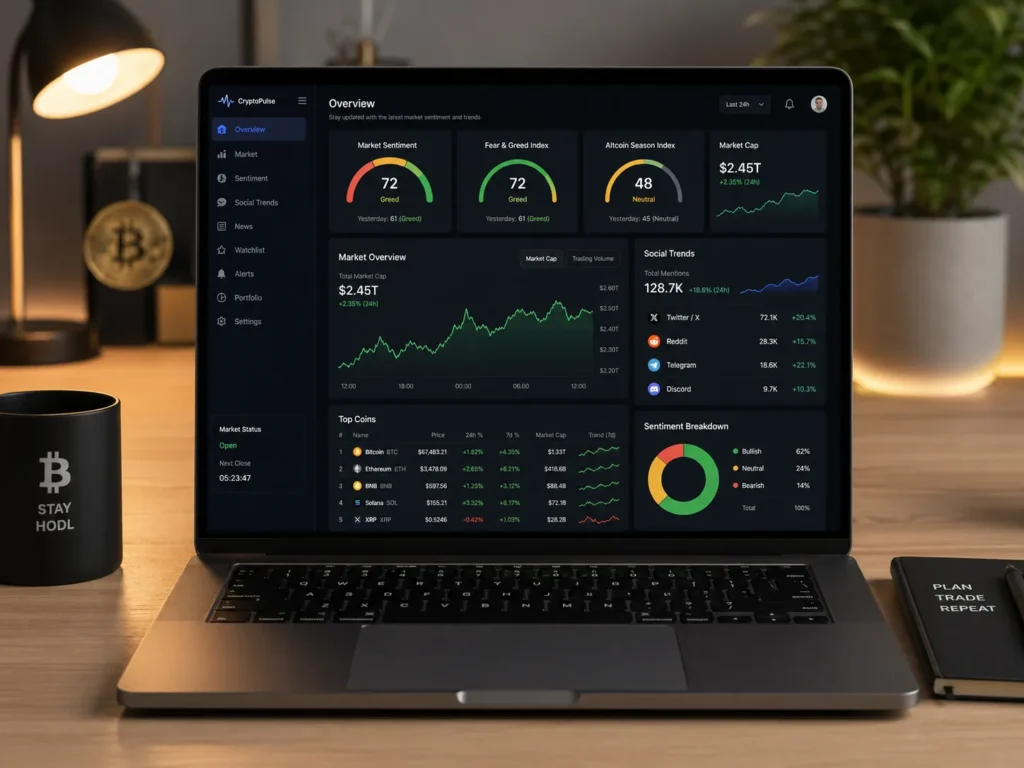
Because crypto markets operate 24/7, sentiment shifts can happen at any time, often without warning.
Quick Tip
Avoid reacting to a single sentiment signal. Instead, look for alignment across multiple indicators before making decisions.
Real World Scenario
Consider a situation where Bitcoin prices are rising rapidly while social media sentiment turns overwhelmingly positive.
At first glance, this might suggest a strong bullish trend. However, if funding rates are also climbing sharply and trading volume begins to slow, it could indicate an overheated market.
A cautious trader might wait for confirmation rather than entering at peak enthusiasm.
Common Mistakes When Reading Sentiment
Even experienced traders can misinterpret sentiment signals.
- Confusing hype with sustainable trends
- Ignoring underlying fundamentals
- Overreacting to short-term news
- Relying too heavily on social media signals
Recognizing these pitfalls can help maintain a more balanced perspective.
Tools Used to Track Sentiment
There are several ways to monitor sentiment effectively:
- Aggregated sentiment dashboards
- Blockchain data analytics
- Derivatives market indicators
- Social listening platforms
These tools don’t predict the future, but they help frame current market conditions.
Frequently Asked Questions
What is crypto market sentiment
It is the overall attitude of investors toward the cryptocurrency market, ranging from bullish to bearish.
Why is sentiment important in crypto
It helps explain price movements and provides context for market behavior beyond technical data.
Can sentiment predict price direction
It can offer signals, but it does not guarantee outcomes or precise timing.
What tools measure crypto sentiment
Common tools include fear and greed indexes, funding rates, and social media analysis platforms.
Is market sentiment reliable
It is useful as part of a broader analysis but should not be used alone for decision-making.
Conclusion
Market sentiment crypto offers insight into the emotional and behavioral side of trading. While it doesn’t replace technical or fundamental analysis, it adds an important layer of understanding.
By combining sentiment with other indicators, investors can approach the market with greater awareness and more balanced decision-making.
https://www.sec.gov
https://www.cftc.gov
https://www.investor.gov
https://www.federalreserve.gov
This article is for general informational purposes only and does not provide legal, financial, medical, or professional advice. Policies, rates, and regulations may change over time.