

 wewe
wewe 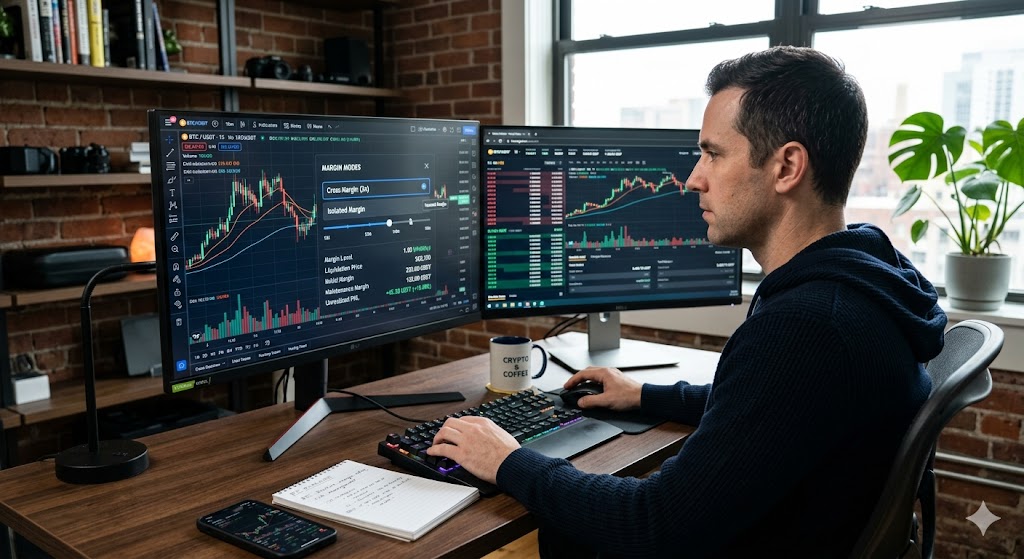
Margin trading offers flexibility, but choosing between cross margin and isolated margin can significantly affect your risk exposure. Understanding how these two systems work is essential for managing trades responsibly—especially in volatile markets.
What Cross and Isolated Margin Mean
Margin modes determine how your funds are used to support open positions.
Cross Margin
Cross margin uses your entire available account balance to support all open positions.
- All funds act as shared collateral
- Losses in one trade can affect your entire account
- Reduces immediate liquidation risk
Isolated Margin
Isolated margin limits risk to a specific position.
- Only assigned margin is used for that trade
- Losses are contained within that position
- Other funds remain untouched
The key difference is how risk is distributed across your account.
Comparing Cross vs Isolated Margin
| Feature | Cross Margin | Isolated Margin |
|---|---|---|
| Collateral Usage | Entire account balance | Only allocated funds |
| Risk Exposure | Higher (shared risk) | Lower (limited to position) |
| Liquidation Impact | Can affect all funds | Limited to one trade |
| Flexibility | High | More controlled |
| Best For | Experienced traders | Risk-conscious traders |
Cross margin prioritizes flexibility, while isolated margin emphasizes control.
Pro Insight
Many experienced traders switch between both modes depending on the situation. Cross margin can be useful when managing multiple positions, while isolated margin is often preferred for high-risk trades where limiting downside is critical.
The choice isn’t permanent—it’s strategic.
How Cross Margin Works in Practice
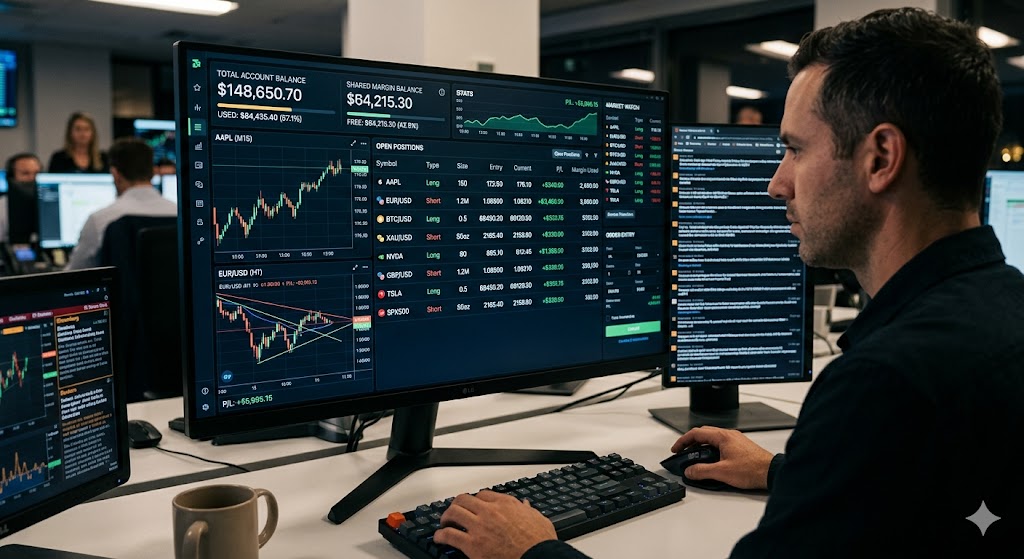
In cross margin mode:
- Your full account balance supports open trades
- If one position loses value, the system draws from available funds
- This can delay liquidation
However, if losses continue, more of your account is exposed.
Example
You have $2,000 in your account:
- One trade starts losing
- The system uses remaining balance to keep it open
- If losses grow, the entire account may be at risk
How Isolated Margin Works in Practice
Isolated margin creates a boundary around each trade.
- You assign a fixed amount to a position
- Only that amount is at risk
- Other funds are protected
Example
You allocate $200 to a trade:
- If the trade fails, only $200 is lost
- The rest of your account remains unaffected
This structure makes risk easier to control.
Quick Tip
If you’re new to margin trading, start with isolated margin. It helps you limit losses while learning how leverage behaves in real market conditions.
Real-World Scenario
A trader opens two positions:
- One profitable
- One losing
With cross margin:
- The losing trade can consume profits from the winning one
With isolated margin:
- The losing trade is capped
- The profitable trade remains unaffected
Same trades—different outcomes based on margin mode.
When to Use Each Margin Type
Cross Margin May Work Better When
- Managing multiple positions simultaneously
- Needing flexibility to avoid early liquidation
- Actively monitoring trades
Isolated Margin May Work Better When
- Limiting risk per trade
- Testing new strategies
- Trading volatile assets
The right choice depends on your experience and risk tolerance.
Common Mistakes to Avoid
- Using cross margin without understanding full account risk
- Over-leveraging isolated positions
- Ignoring liquidation levels
- Not adjusting margin mode based on strategy
Margin mode is not just a setting—it’s a core risk decision.
Frequently Asked Questions
What is the main difference between cross and isolated margin?
Cross margin uses your entire account as collateral, while isolated margin limits risk to a single position.
Is cross margin riskier than isolated margin?
Yes, because losses can affect your entire account balance.
Can I switch between margin modes?
Most platforms allow switching, but it may depend on whether positions are open.
Which margin mode is better for beginners?
Isolated margin is generally easier for managing risk.
Does isolated margin prevent liquidation?
No, but it limits how much you can lose to the amount allocated to that trade.
Conclusion
Cross vs isolated margin is ultimately a choice between flexibility and control. Cross margin allows you to extend the life of trades using your full balance, while isolated margin helps contain risk within defined limits.
Understanding how each mode works—and when to use them—can make a meaningful difference in how you manage leveraged trades over time.
Trusted U.S. Resources
https://www.sec.gov
https://www.finra.org
https://www.investor.gov
https://www.cftc.gov
This article is for general informational purposes only and does not provide legal, financial, medical, or professional advice. Policies, rates, and regulations may change over time.