
 wewe
wewe 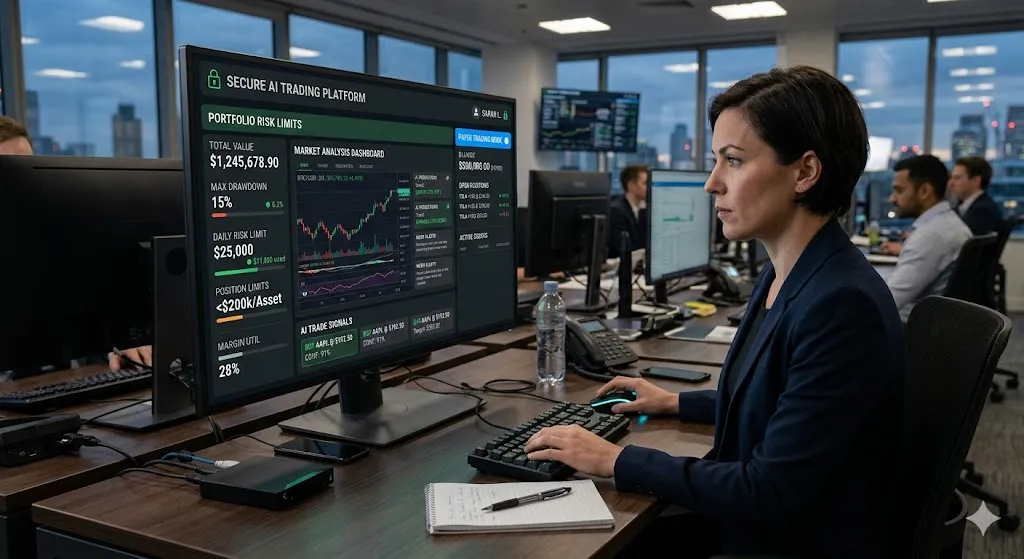
AI trading is the use of artificial intelligence, machine learning, data models, or automated decision systems to help analyze markets and support trading decisions. It can be used in stocks, crypto, forex, options, commodities, and other financial markets.
The appeal is easy to understand. Markets move quickly, data is overwhelming, and human emotions can lead to poor timing. AI trading tools may help scan information, identify patterns, test strategies, and execute rules with more consistency.
But AI does not make trading risk-free. It can process data faster than a person, but it can also misread unstable markets, rely on weak assumptions, or execute flawed strategies at scale. The real value depends on how the system is built, tested, monitored, and controlled.
What AI Trading Actually Means
AI trading refers to market analysis or trade execution supported by artificial intelligence. Some tools use machine learning to study historical price behavior. Others analyze news, earnings reports, economic data, market sentiment, order flow, or technical indicators.
Not every automated trading system is truly AI. A simple bot that buys when a moving average crosses another moving average is rule-based automation. An AI-based system may adjust its interpretation based on data patterns, model training, or predictive analysis.
That distinction matters. AI trading sounds advanced, but the label alone does not prove quality. A poorly designed AI model can be less reliable than a simple, well-tested strategy.
At its best, AI trading is a decision-support tool. It can help traders organize information and act with discipline. It should not be treated as a replacement for risk management.
Why Traders Use AI Trading Tools
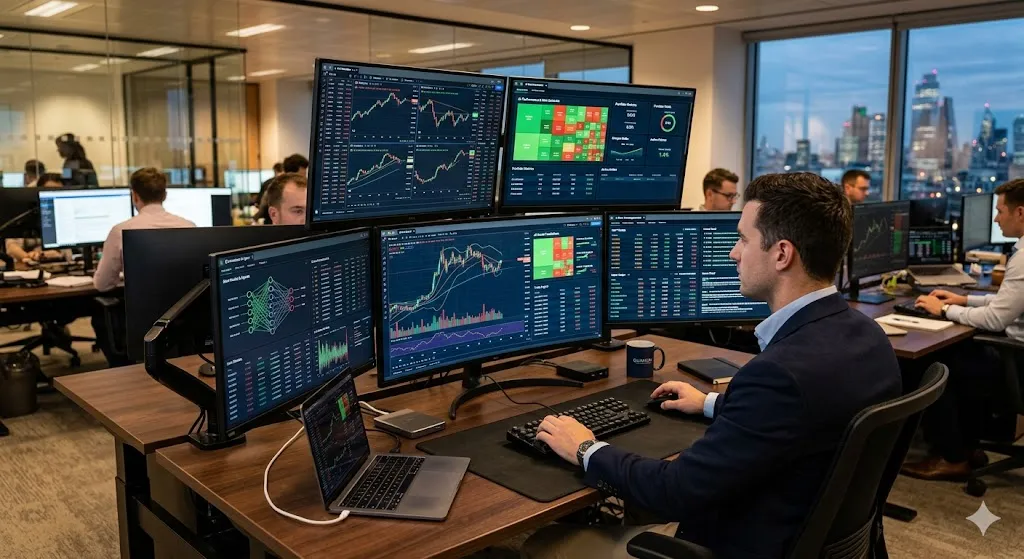
Traders use AI because financial markets produce more data than most people can reasonably process. Prices, volume, earnings, interest rates, news, social sentiment, and global events can all influence market behavior.
AI tools can scan large datasets quickly. They may detect relationships that are difficult to see manually, such as repeated volatility patterns, unusual volume behavior, or correlations between assets.
Another reason is emotional control. Human traders may hesitate, panic, overtrade, or chase price movement. AI trading systems follow programmed logic without fear or excitement. That can be useful, but only when the logic is sound.
There is also a practical time benefit. A trader may use AI to screen opportunities, monitor alerts, rebalance a portfolio, or test strategies without watching charts all day.
Still, speed and automation are not the same as skill. A fast system can lose money quickly if it is pointed in the wrong direction.
Common Types of AI Trading
AI trading can take several forms. Some tools are built for active traders, while others support longer-term investors.
| AI Trading Type | How It Works | Best Used For | Main Risk |
|---|---|---|---|
| Predictive modeling | Uses historical and current data to estimate possible price movement | Strategy research and signal generation | Models may fail when market conditions change |
| Sentiment analysis | Reviews news, social media, or text data for market tone | Event-driven monitoring | Sentiment can be noisy or misleading |
| Algorithmic execution | Automates trade placement based on rules or model output | Faster and more consistent execution | Bad settings can create repeated losses |
| Portfolio optimization | Uses data models to adjust asset allocation | Diversification and rebalancing | Assumptions may not hold in stressed markets |
| Risk monitoring | Tracks exposure, volatility, drawdowns, and limits | Controlling downside risk | Alerts are only useful if acted on |
The most useful AI trading setup is often not the most complicated one. A tool that clearly supports a defined strategy is usually better than a complex system that the trader does not understand.
How AI Trading Works in Practice
A typical AI trading workflow starts with data. The system may collect historical prices, volume, technical indicators, market indexes, financial statements, economic releases, or alternative data.
Next, the model looks for patterns. It may try to identify whether certain conditions have historically appeared before price moves, volatility shifts, or trend changes. The model may then generate a signal, ranking, probability estimate, or suggested trade action.
After that, the trader decides how the signal will be used. Some people use AI only for research. Others connect it to automated execution through a broker or exchange.
The final step is monitoring. This is where many weak systems fail. A model that worked during one market cycle may perform poorly when interest rates, liquidity, volatility, or investor behavior changes.
AI trading is not a set-and-forget process. It needs review.
Pro Insight
The most important part of AI trading is not the model. It is the risk framework around the model.
A trader can have an impressive algorithm and still lose money if position sizes are too large, stop conditions are unclear, or the system keeps trading during abnormal market conditions. Risk controls decide how much damage a wrong prediction can do.
This is why professional trading systems often care as much about drawdowns, exposure, liquidity, and execution quality as they do about signal accuracy. A model does not need to be perfect to be useful, but it does need boundaries.

Benefits of AI Trading
AI trading can improve consistency. Instead of relying on mood or impulse, a trader can use defined signals and repeatable rules. That can reduce emotional decision-making, especially during volatile periods.
It can also improve research speed. AI tools may review many assets at once and highlight patterns that deserve attention. This can be helpful for traders who follow multiple markets.
Backtesting is another benefit. Traders can test how a strategy might have performed in past conditions. While backtesting has limits, it can reveal obvious weaknesses before real money is involved.
AI can also support better recordkeeping. A system that tracks entries, exits, reasons for trades, and outcomes can help traders review performance more honestly.
The benefit is not magic. It is structure.
Risks and Limitations of AI Trading
The biggest risk is overconfidence. AI can make a strategy look more scientific than it really is. A model may perform well on historical data but fail in live markets because the future does not repeat perfectly.
Overfitting is another problem. This happens when a model is trained so closely on past data that it performs well in testing but poorly in real trading. It memorizes the past instead of learning something useful.
Data quality also matters. Incorrect prices, incomplete records, delayed feeds, or biased datasets can lead to weak conclusions.
Execution risk is easy to overlook. A strategy may look profitable before considering slippage, spreads, commissions, market impact, taxes, and order delays. In fast markets, the price you expect may not be the price you receive.
There is also platform risk. If a trading tool connects to a brokerage or exchange, account permissions, API security, outages, and software bugs become part of the risk picture.
Quick Tip
Test AI trading tools in paper trading or with very small position sizes before using meaningful capital.
Real market behavior can expose issues that backtests miss, including execution delays, emotional discomfort, unexpected volatility, and transaction costs.
A Real-World Micro Scenario
Imagine a trader who uses an AI tool to scan large-cap stocks for unusual volume and trend strength. The model highlights several stocks that appear to have momentum.
Instead of buying every signal, the trader applies additional filters. They check earnings dates, market conditions, position size, and maximum loss limits. One stock has an earnings announcement the next morning, so they skip it. Another fits the strategy but has a wide spread, so they reduce the trade size.
The AI tool helps narrow the field, but the trader still manages risk. That is a healthier use of AI trading than blindly following every alert.
Practical Steps Before Using AI Trading
Start by defining your goal. Are you using AI to find trade ideas, manage a portfolio, automate execution, or monitor risk? A tool should match the job.
Next, understand the strategy logic. You do not need to be a data scientist, but you should know what the tool is analyzing and what conditions can cause it to fail.
Review costs carefully. Subscription fees, trading commissions, spreads, slippage, and taxes can change the real outcome. A strategy with frequent trades needs stronger performance just to overcome costs.
Use limits. Set maximum position sizes, daily loss limits, exposure limits, and clear conditions for pausing the system.
Keep records. Track which signals were followed, which were ignored, and what happened afterward. This helps separate real performance from selective memory.
Finally, review the system regularly. Markets change. AI trading models should be treated as tools that require oversight, not machines that remove responsibility.
Choosing an AI Trading Platform
A good AI trading platform should be transparent enough to evaluate. It should explain what the tool does, what data it uses, what risks apply, and how users can control execution.
Be careful with platforms that focus mainly on impressive screenshots, vague performance claims, or aggressive marketing. Real trading involves losing periods, uncertain outcomes, and changing market conditions.
Useful features may include paper trading, backtesting, risk controls, performance reporting, manual override, broker compatibility, and clear account permission settings.
Security is important too. If the platform connects to a brokerage or exchange, use strong authentication and avoid unnecessary permissions. A trading tool should not have more account access than it needs.
Frequently Asked Questions
Is AI trading profitable?
AI trading can support profitable strategies, but it does not guarantee profit. Results depend on the model, market conditions, costs, execution quality, and risk management.
Is AI trading safe for beginners?
Beginners should be cautious. AI tools can make trading look easier than it is. A safer approach is to start with education, paper trading, small position sizes, and simple strategies before using automation.
What is the difference between AI trading and algorithmic trading?
Algorithmic trading follows programmed rules. AI trading may use machine learning, predictive models, or data-driven pattern recognition. Some systems combine both.
Can AI replace a human trader?
AI can assist with analysis and execution, but human oversight remains important. Traders still need to manage risk, evaluate market context, and understand when a system may not be appropriate.
What should I check before using an AI trading tool?
Review the strategy logic, fees, backtesting method, live performance assumptions, risk controls, broker permissions, security settings, and whether the tool can be paused quickly.
Conclusion
AI trading can be a useful tool for market analysis, automation, and risk monitoring. It can process data quickly, reduce emotional decisions, and support more structured trading habits.
But it is not a shortcut around uncertainty. Models can fail, data can mislead, and automated systems can magnify mistakes. The strongest approach combines AI tools with clear rules, conservative risk limits, and regular human review.
Used carefully, AI trading can improve discipline and efficiency. Used blindly, it can create confidence without control.
Trusted U.S. Resources
This article is for general informational purposes only and does not provide legal, financial, medical, or professional advice. Policies, rates, and regulations may change over time.