

 wewe
wewe 
A 24/7 crypto bot is software designed to monitor markets, place trades, and follow preset rules even when a trader is not actively watching the screen. In a market that never closes, that kind of automation can be useful. It can also create problems quickly when the strategy, exchange settings, or risk controls are poorly planned.
Crypto trading is different from traditional stock trading because digital asset markets run continuously across weekends, holidays, and overnight hours. A bot can help manage that nonstop environment, but it does not remove uncertainty. It simply executes instructions faster and more consistently than a person can.
The real value of a crypto bot depends less on the software itself and more on the logic behind it. A cautious setup, modest expectations, and clear limits matter more than chasing aggressive settings.
What a 24/7 Crypto Bot Actually Does
A 24/7 crypto bot connects to a crypto exchange through an API, reads market data, and places orders based on rules selected by the user. Those rules may involve price movements, technical indicators, portfolio rebalancing, dollar-cost averaging, or grid trading.
At its simplest, the bot follows instructions such as buying when a price drops by a certain percentage or selling when a target is reached. More advanced bots may combine several conditions, such as volume changes, trend signals, and volatility filters.
The key point is this.
A bot does not “know” where the market will go. It reacts to conditions. If those conditions are poorly designed, the bot may repeat bad decisions around the clock.
Why Crypto Bots Run Around the Clock
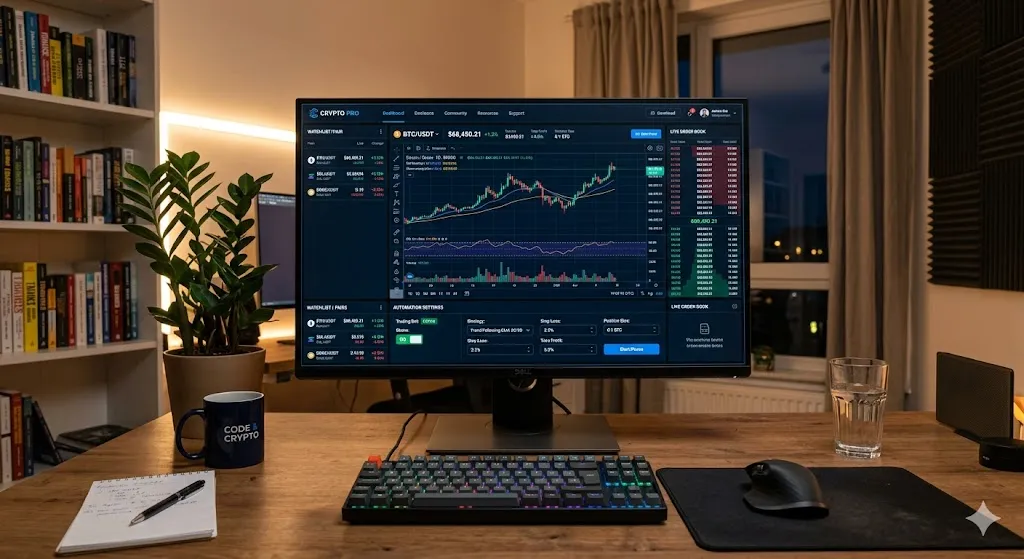
Crypto markets operate continuously because trading happens across global exchanges without a central closing bell. Bitcoin, Ethereum, and many other digital assets can move sharply during hours when a trader is asleep or away from their device.
That creates both an opportunity and a challenge. A 24/7 crypto bot can react to price changes immediately, but constant access does not mean constant opportunity. Some market conditions are noisy, thinly traded, or unusually volatile.
This is where discipline matters. A bot should not be treated like a money machine. It is better viewed as a tool for executing a defined plan with less emotion.
Common Types of Crypto Bots
Different bot styles serve different purposes. Some are built for active trading. Others are better suited for gradual accumulation or portfolio maintenance.
| Bot Type | How It Works | Best Used For | Main Risk |
|---|---|---|---|
| Grid bot | Places buy and sell orders within a price range | Sideways or range-bound markets | Can struggle in strong trends |
| DCA bot | Buys gradually at preset intervals or price drops | Long-term accumulation | May keep buying during a major decline |
| Arbitrage bot | Looks for price differences across exchanges | Fast price discrepancies | Fees, delays, and execution risk |
| Rebalancing bot | Adjusts portfolio weights automatically | Portfolio discipline | May sell winners too early |
| Signal-based bot | Trades based on indicators or alerts | Rule-driven strategies | False signals in choppy markets |
No single bot type is best for every trader. A conservative investor may prefer a DCA or rebalancing bot, while a more active trader may test grid or signal-based automation. The right choice depends on experience, time horizon, and risk tolerance.
Pro Insight
The most common mistake is choosing a bot before defining the trading plan. Software should come after the strategy, not before it.
A trader should first answer practical questions. What asset will be traded? What market condition is the bot designed for? How much capital can be allocated without affecting essential finances? What happens if the asset drops 20 percent, 40 percent, or more?
Those answers shape the bot settings. Without them, automation can turn small judgment errors into repeated execution errors.
Benefits of Using a 24/7 Crypto Bot
The main advantage of a 24/7 crypto bot is consistency. It can follow rules without hesitation, fatigue, or emotional reaction. That can be helpful during volatile periods when manual traders may panic, overtrade, or abandon their plan.
A bot can also save time. Instead of checking price charts all day, a user can set defined rules and review performance periodically. This is especially useful for strategies that require repeated small actions, such as grid trading or scheduled accumulation.
Another benefit is speed. Crypto prices can move quickly, and a bot may place an order faster than a manual trader. Still, speed only helps when the underlying decision is sound. Fast execution of a weak strategy is still weak execution.
Risks and Consequences to Understand
The risks are real. A bot can trade during exchange outages, sudden market drops, low-liquidity conditions, or periods of unusual price movement. If settings are too aggressive, losses can build before the user notices.
There is also technical risk. API permissions, exchange security, server downtime, software bugs, and incorrect order settings can all cause problems. A bot connected with withdrawal permissions, for example, can create unnecessary exposure if the account is compromised.
Fees matter too. Frequent trades may look profitable before costs but less attractive after trading fees, spreads, and slippage. In smaller accounts, these costs can quietly reduce performance.
A responsible setup should include limits on position size, maximum exposure, stop conditions, and review frequency. Automation should reduce manual workload, not remove oversight completely.
Quick Tip
Start with paper trading or the smallest practical amount before using meaningful capital. A bot that looks good in theory may behave differently during real market movement, especially when fees and execution delays are included.
A Real-World Micro Scenario
Imagine a trader who wants exposure to Ethereum but does not want to buy all at once. Instead of watching the chart every day, they set a DCA bot to buy a small amount on a regular schedule, with a limit on total monthly spending.
This setup is not designed to catch the perfect bottom. It is designed to reduce timing pressure and keep the process consistent. If Ethereum falls sharply, the trader reviews the plan rather than letting the bot spend endlessly. If the market rises, the bot continues at the same measured pace.
That is a practical use of automation. The bot supports a plan instead of replacing judgment.
How to Choose a 24/7 Crypto Bot
A good crypto bot should be understandable before it is impressive. Clear settings, transparent fee information, exchange compatibility, and basic safety controls are more important than complicated dashboards.
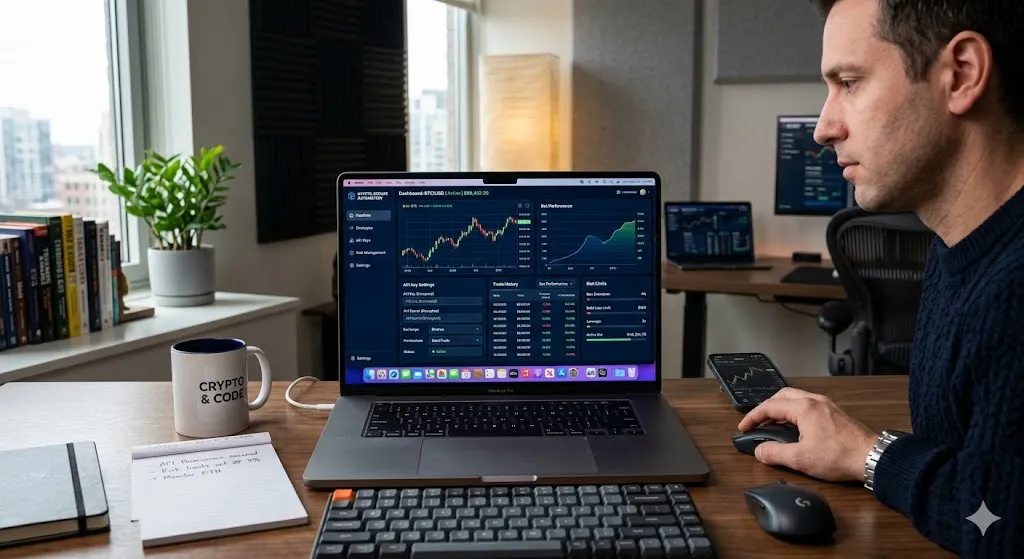
Look for API permission controls, trade limits, backtesting or paper trading features, and easy access to transaction history. The platform should make it simple to pause the bot, adjust settings, and review open orders.
Avoid relying only on screenshots of past performance. Markets change. A strategy that worked during a calm range may fail during a breakout, crash, or liquidity event.
Practical Setup Steps
Begin with a defined purpose. Decide whether the bot is for accumulation, rebalancing, range trading, or testing a specific strategy. Then choose a small group of liquid assets rather than spreading automation across too many coins.
Set conservative order sizes. Confirm that API keys do not include withdrawal access unless absolutely necessary. Review fee structures and test the bot under real market conditions with limited capital.
Finally, schedule regular reviews. A 24/7 crypto bot may run continuously, but it should not be ignored continuously. Markets evolve, and settings that made sense last month may need adjustment later.
Frequently Asked Questions
Is a 24/7 crypto bot safe to use?
A 24/7 crypto bot can be used more safely when it has limited API permissions, conservative trade settings, and regular monitoring. It is not risk-free. Market volatility, exchange issues, and poor strategy design can still lead to losses.
Can a crypto bot guarantee profit?
No. A crypto bot cannot guarantee profit. It only executes rules based on market conditions and user settings. Results depend on the strategy, fees, volatility, liquidity, and broader market behavior.
What is the best type of crypto bot for beginners?
Many beginners start with DCA or rebalancing bots because the logic is easier to understand than high-frequency or complex signal-based strategies. Even then, small test amounts and careful review are important.
Should a bot run all day and night?
A bot may be designed to run continuously, but that does not mean every strategy should stay active in every market condition. Some traders pause bots during major news, extreme volatility, or unclear market structure.
How much money should be used with a crypto bot?
Only funds that a person can afford to risk should be considered for crypto bot trading. A cautious approach is to start small, evaluate real performance after fees, and avoid increasing capital until the strategy is well understood.
Conclusion
A 24/7 crypto bot can be a useful tool for traders who want consistent execution in a market that never closes. It can reduce emotional decision-making, automate repetitive tasks, and support structured strategies.
But automation does not remove risk. The bot is only as reliable as the plan behind it. Clear limits, careful testing, secure API settings, and regular review are essential.
Used thoughtfully, a crypto bot can support a disciplined trading process. Used carelessly, it can multiply mistakes faster than a manual trader ever could.
Trusted U.S. Resources
https://www.consumerfinance.gov
This article is for general informational purposes only and does not provide legal, financial, medical, or professional advice. Policies, rates, and regulations may change over time.