
 wewe
wewe 
Learn how on-chain signals work, which metrics matter most, and how investors use them to understand crypto markets.
Crypto prices move fast—but on-chain signals explain why they move. These blockchain-based indicators expose real behavior: who’s transacting, how assets flow, and whether activity reflects conviction or speculation.
For investors and analysts, on-chain signals add context that charts alone can’t provide, turning raw blockchain data into meaningful insight.
What On-Chain Signals Actually Are
On-chain signals are metrics derived directly from blockchain activity. They track transactions, wallets, smart contracts, and network usage in real time, without relying on self-reported data.
Imagine two weeks of flat prices. Beneath the surface, active addresses climb and exchange balances fall. On-chain signals reveal accumulation even when price looks stagnant.
That transparency is why these signals matter.
Core Types of On-Chain Signals to Know
Different signals answer different questions about market behavior.
Network Activity Signals track transactions, active addresses, and fees to gauge real usage.
Supply Signals monitor how much crypto sits on exchanges versus private wallets.
Holder Behavior Signals analyze long-term holders, short-term traders, and wallet age.
Flow Signals follow movements between wallets, exchanges, and smart contracts.
Together, these signals form a behavioral map of the market.
How On-Chain Signals Compare
| Signal Type | What It Measures | Best For | Common Interpretation |
|---|---|---|---|
| Active Addresses | User participation | Adoption trends | Network growth |
| Exchange Balances | Liquid supply | Selling pressure | Distribution risk |
| HODL Waves | Holding duration | Investor conviction | Long-term bias |
| Transaction Volume | Economic activity | Demand strength | Real usage |
| Wallet Flows | Asset movement | Market intent | Volatility signals |
This comparison helps identify which signals align with long-term analysis versus short-term monitoring.
Reading Signals in Real-Life Scenarios
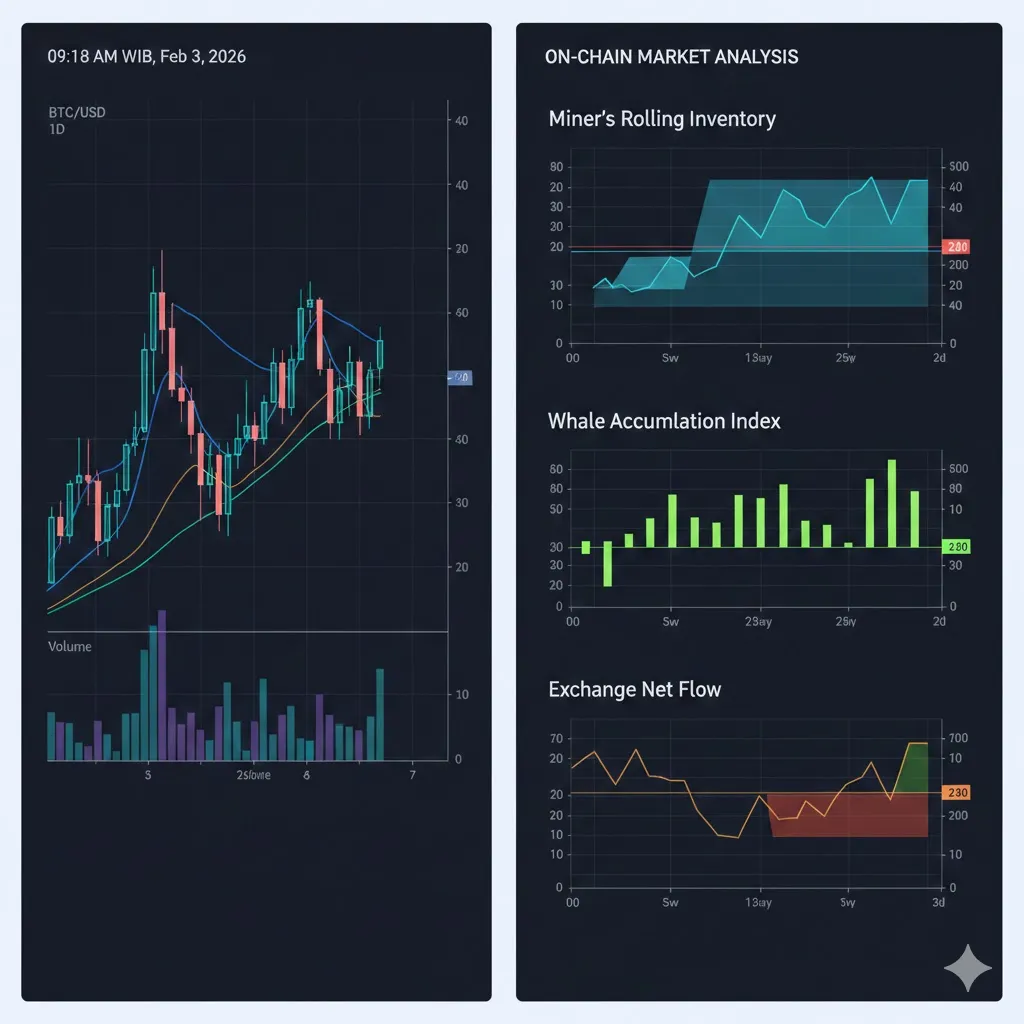
On-chain signals shine during uncertainty. For example, prices may dip sharply, but long-term holder balances remain steady while exchange balances decline. That divergence often reflects short-term fear rather than structural weakness.
Conversely, rising prices paired with increasing exchange inflows and declining holder conviction may suggest distribution—an early warning that price momentum could fade.
Signals don’t predict outcomes, but they sharpen interpretation.
Avoiding Common On-Chain Misreads
One mistake is relying on a single signal in isolation. Another is ignoring timeframes—what matters to a trader may be noise to a long-term holder.
Context is everything. Signals gain power when multiple metrics align over time, not when one spikes briefly due to news or internal transfers.
Disclaimer
This article is for general informational purposes only and does not constitute financial, investment, or trading advice. Always conduct independent research before making decisions.
Pro Insight
On-chain signals are most effective when paired with market structure—price trends, volume, and derivatives data provide essential context.
Quick Tip
Track changes in on-chain metrics rather than absolute values; direction often matters more than size.
Frequently Asked Questions
What are on-chain signals in crypto?
They are metrics derived directly from blockchain data that reflect real network and user behavior.
Are on-chain signals better than technical indicators?
They’re complementary. On-chain signals explain behavior; technicals visualize price patterns.
Do on-chain signals work for all blockchains?
Most are chain-specific, though major networks provide the clearest datasets.
Can beginners use on-chain signals?
Yes. Many tools present signals visually, making them accessible with practice.
How often should on-chain signals be checked?
Long-term investors review weekly trends; traders may monitor daily shifts.
Conclusion
On-chain signals bring transparency to markets built on transparency. By revealing what participants are doing—not just what price is showing—they help separate conviction from noise.
Used thoughtfully, on-chain signals don’t predict the future. They illuminate the present—and that clarity is powerful.
Trusted U.S. Resources
U.S. Securities and Exchange Commission — Digital Asset Markets
https://www.sec.gov
Commodity Futures Trading Commission — Crypto Market Oversight
https://www.cftc.gov
CoinDesk Research — On-Chain Analysis
https://www.coindesk.com/research