
 wewe
wewe 
Learn on-chain analytics in 2026 with simple explanations, real micro-scenarios, and the key metrics traders use to read crypto behavior beyond charts.
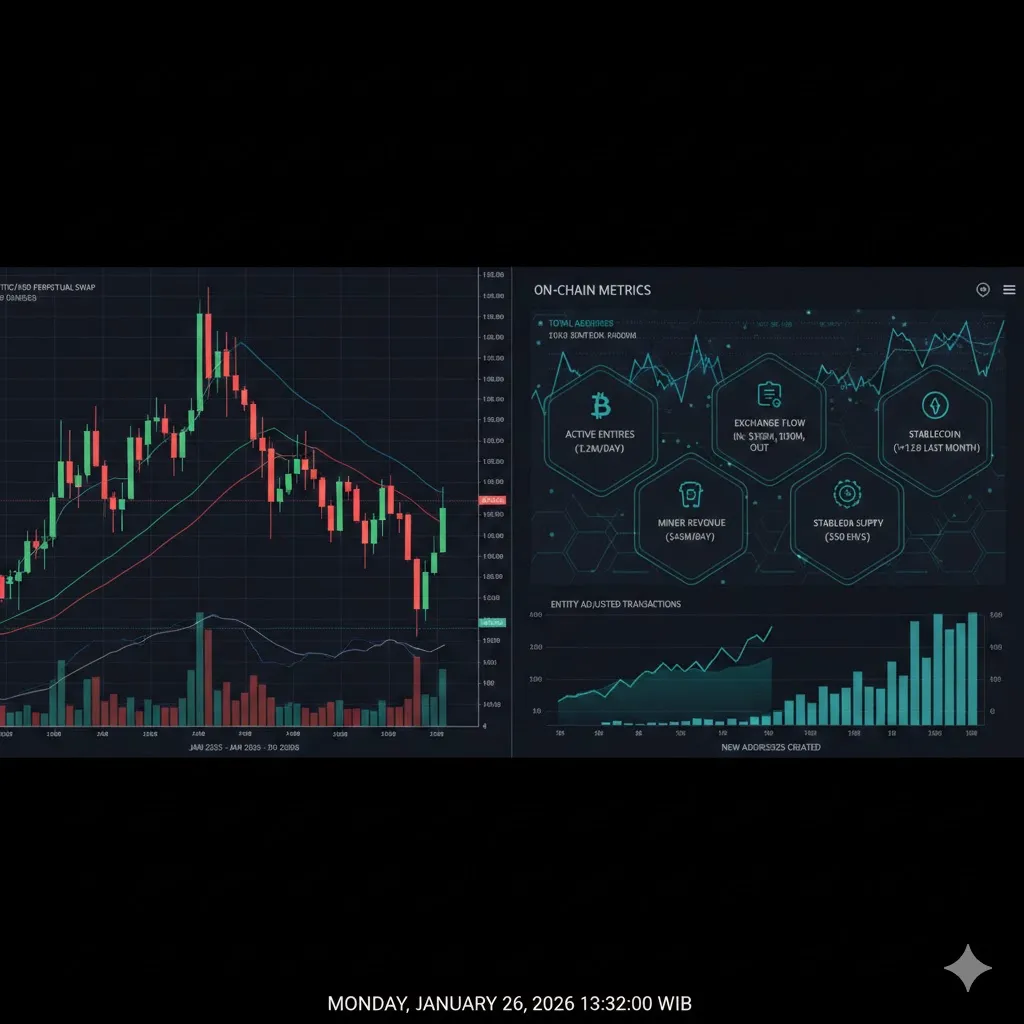
On-chain analytics helps you understand what’s happening inside a blockchain—using real transaction data instead of opinions. While price charts show what happened, on-chain data can hint at why it happened and what might happen next.
However, on-chain analytics isn’t magic. It won’t predict every move. Still, it can give you a clearer view of market behavior, especially during fear, hype, or sudden trend shifts.
For example, if Bitcoin price is flat but exchange deposits are rising, that can signal potential selling pressure. That insight doesn’t guarantee a drop, but it helps you trade with more awareness.
What On-Chain Analytics Really Means
On-chain analytics is the process of analyzing blockchain activity such as:
- wallet movements
- exchange inflows and outflows
- transaction volume
- network usage
- holder behavior over time
Unlike traditional finance, many blockchain transactions are public. Therefore, you can study real behavior instead of relying only on headlines.
If you’re trading derivatives, pairing this with a perpetual futures guide can help you avoid chasing moves that are driven by leverage rather than real demand.
Why Traders Use On-Chain Analytics
On-chain analytics helps answer questions like:
- Are people moving coins to exchanges to sell?
- Are long-term holders accumulating or distributing?
- Is the network activity growing or fading?
- Are whales making big moves?
Real-life micro-scenario:
A trader notices rising exchange inflows for ETH while price is still climbing. Instead of buying the breakout, they reduce risk. A few hours later, the market drops sharply. The on-chain signal didn’t “predict” the crash, but it warned that sell-side liquidity was building.
That’s the real value: context.

The Most Useful On-Chain Metrics to Know
Exchange inflows and outflows
This is one of the most watched signals.
- Inflow rising: coins moving to exchanges, possible selling pressure
- Outflow rising: coins leaving exchanges, possible accumulation
Still, it depends on timing. Some inflows are for collateral or trading, not always selling.
Active addresses
This measures how many unique addresses are active in a period. Rising activity can suggest growing network interest.
However, this metric can be noisy. It may spike due to bots or temporary hype.
Transaction volume
High transaction volume can reflect strong usage, but it can also be driven by internal exchange movements.
Long-term holders vs short-term holders
On-chain tools often categorize holders by how long they’ve held coins. This helps you see whether strong hands are accumulating or exiting.
On-Chain Analytics vs Technical Analysis
| Feature | On-Chain Analytics | Technical Analysis |
|---|---|---|
| Data source | Blockchain activity | Price and volume charts |
| Best for | Market behavior signals | Entries and exits |
| Strength | Shows real transfers | Shows market structure |
| Weakness | Can be slow/noisy | Can miss hidden flows |
| Ideal use | Confirmation | Execution timing |
This table explains why many traders combine both. On-chain can give the “story,” while charts give the “timing.”
The Most Common On-Chain Mistakes
Treating one metric like a prediction
On-chain data is a clue, not a guarantee. It works best in combination.
Ignoring timeframes
Some signals matter over weeks, not hours. Still, traders often use them for short-term decisions.
Overreacting to whale wallets
Large transfers can look scary. However, not every whale move is a sell-off. Some are internal custody shifts.
Forgetting market structure
On-chain can look bullish while price is breaking down technically. That’s why confirmation matters.
If you trade leverage, pairing on-chain signals with a risk management checklist can keep you from overcommitting.
Pro Insight
On-chain analytics is most powerful when it confirms what price is already hinting at. The best traders don’t rely on it alone—they use it as a second opinion.
How to Use On-Chain Analytics in Real Trading
Here are practical ways traders apply it:
Spot accumulation signals
When exchange outflows rise and long-term holders increase, some traders interpret it as accumulation.
Distribution warnings
When inflows rise and long-term holders start moving coins, it can signal distribution.
Trend strength confirmation
If price rises and network activity grows, the move may have stronger demand behind it.
Avoiding leverage traps
If funding rates are high and on-chain inflows spike, that can signal an overheated market. This connects directly to funding rates and liquidation risk.
Quick Tip
Before entering a big trade, check exchange inflows. If inflows are rising fast, reduce leverage or wait for confirmation.
FAQs About On-Chain Analytics
Is on-chain analytics only for Bitcoin?
No. Many blockchains provide on-chain data, including Ethereum and other networks, depending on transparency and tooling.
Can on-chain analytics predict price?
Not perfectly. It helps identify behavior patterns and risk signals, but it cannot guarantee outcomes.
What’s the most important on-chain metric for beginners?
Exchange inflows and outflows are often the easiest starting point.
Do on-chain signals work for day trading?
Sometimes, but many signals are better for short- to mid-term context rather than minute-by-minute timing.
Is on-chain analytics useful for futures trading?
Yes. It can help spot overheating markets and potential selling pressure before big volatility hits.
Disclaimer
This article is for general informational purposes only and does not provide financial or investment advice. Crypto markets are volatile, and on-chain signals do not guarantee outcomes.
Trusted U.S. Sources
- https://www.sec.gov/investor/alerts/ia_riskycryptotrading.pdf
- https://www.cftc.gov/LearnAndProtect/AdvisoriesAndArticles/customer_advisories.html
- https://www.finra.org/investors/insights/cryptocurrency
- https://www.investor.gov/introduction-investing/general-resources/news-alerts/alerts-bulletins/investor-bulletins