

 wewe
wewe 
High risk high reward crypto continues to attract attention from investors looking beyond traditional assets. While the potential upside can be significant, the volatility and uncertainty in this space require a measured, informed approach. Understanding how these assets work—and where the risks lie—can make a meaningful difference in how you navigate them.
What High Risk High Reward Crypto Means
In the crypto market, high risk high reward typically refers to assets that show large price swings and uncertain long-term value. These can include newer tokens, smaller market cap coins, or projects still in early development.
Unlike established cryptocurrencies, these assets often lack a long track record. Prices may surge quickly due to speculation, hype cycles, or sudden increases in demand. Just as quickly, they can drop.
This volatility is what creates both the opportunity and the risk.
Types of High Risk Crypto Assets
Not all high-risk crypto falls into the same category. Understanding the differences helps set realistic expectations.
Low-cap altcoins
These are smaller cryptocurrencies with relatively low market capitalization. They can move sharply because even modest investment inflows can affect price.
Newly launched tokens
Projects in early stages may attract attention quickly, especially if they introduce a unique concept. However, many lack proven use cases.
Meme coins
Often driven by online communities rather than fundamentals, these assets can experience rapid growth followed by equally rapid declines.
DeFi and experimental platforms
Decentralized finance projects may offer innovative features but can also carry technical and regulatory uncertainties.
Risk vs Reward Comparison
Understanding the trade-off is essential before entering this space.
| Factor | High Risk Crypto | Established Crypto |
|---|---|---|
| Price Volatility | Extremely high | Moderate to high |
| Track Record | Limited or none | More established |
| Liquidity | Often low | Generally higher |
| Potential Upside | Significant | More gradual |
| Downside Risk | Severe losses possible | Still present but less abrupt |
While the potential for large returns exists, the probability of loss is also higher.
Why Prices Move So Dramatically
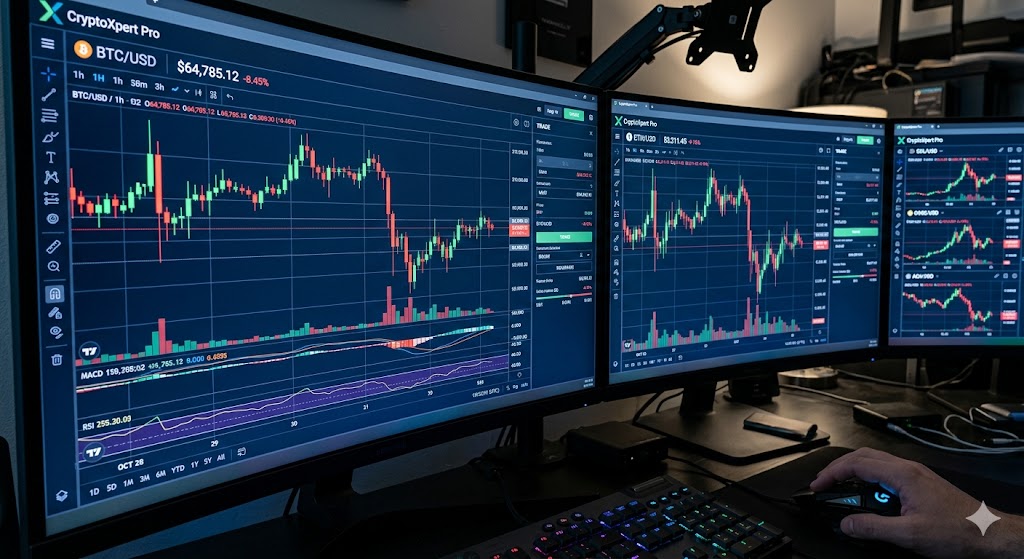
Several forces contribute to the dramatic price movements seen in high-risk crypto.
Market sentiment plays a major role. Social media discussions, influencer mentions, and community hype can drive rapid buying activity. At the same time, negative news or loss of confidence can trigger equally fast sell-offs.
Liquidity is another factor. When fewer buyers and sellers are present, even small trades can push prices significantly in either direction.
Finally, speculation often outweighs fundamentals. Many high-risk assets are valued based on future potential rather than current utility.
Pro Insight
Experienced investors often treat high-risk crypto as a small portion of a broader portfolio rather than a primary investment. This approach helps manage downside exposure while still allowing participation in potential upside scenarios.
Practical Strategies to Approach High Risk Crypto
Approaching this segment requires discipline more than prediction.
Start with clear limits. Decide in advance how much you’re willing to allocate and treat it as capital you can afford to lose without disrupting your financial stability.
Diversification can help reduce concentration risk. Instead of committing everything to one project, spreading exposure across multiple assets may balance outcomes.
Timing also matters. Entering during peak hype periods often increases risk. Many investors look for periods of lower attention or consolidation.
A simple real-world scenario illustrates this. An investor allocates a small portion of their funds across three emerging tokens. One performs poorly, one remains flat, and one gains significantly. The overall result depends less on individual picks and more on allocation discipline.
Quick Tip
Before investing in any crypto project, review its whitepaper, development activity, and community engagement. Even basic research can help filter out weaker projects.
Common Pitfalls to Avoid
Chasing momentum is one of the most frequent mistakes. Rapid price increases can create urgency, but entering late often exposes you to sudden reversals.
Another issue is overexposure. Allocating too much capital to high-risk assets can amplify losses during downturns.
Lack of exit planning is also common. Without predefined profit targets or loss limits, decisions tend to become emotional rather than strategic.
Managing Risk in a Volatile Market

Risk management is not about eliminating uncertainty—it’s about controlling it.
Setting stop-loss levels, maintaining portfolio balance, and periodically reviewing positions can help maintain structure. Staying informed about broader market conditions is equally important.
It’s also worth noting that regulatory developments can influence crypto markets. Changes in policy or enforcement can affect both access and pricing dynamics.
Frequently Asked Questions
What makes a cryptocurrency high risk
Typically, limited history, low market capitalization, and high volatility contribute to higher risk levels.
Can high risk crypto be profitable
It can be, but outcomes vary widely and losses are also common.
How much should I invest in high risk crypto
Many investors limit exposure to a small percentage of their overall portfolio.
Are meme coins considered high risk
Yes, they are often driven by hype and community sentiment rather than fundamentals.
How do I reduce risk when investing in crypto
Diversification, research, and setting clear limits are common strategies to manage risk.
Conclusion
High risk high reward crypto sits at the more speculative end of the investment spectrum. While the upside can be appealing, it comes with equally significant uncertainty. A thoughtful approach—grounded in research, discipline, and realistic expectations—can help you engage with this space more responsibly.
https://www.sec.gov
https://www.investor.gov
https://www.usa.gov
https://www.cftc.gov
This article is for general informational purposes only and does not provide legal, financial, medical, or professional advice. Policies, rates, and regulations may change over time.