

 wewe
wewe 
Gas fees are a core part of how many blockchain networks operate. If you’ve ever sent cryptocurrency or interacted with a decentralized app, you’ve likely paid a gas fee—sometimes small, sometimes unexpectedly high.
Understanding how gas fees work can help you manage costs and make smarter decisions when using crypto networks.
What Are Gas Fees
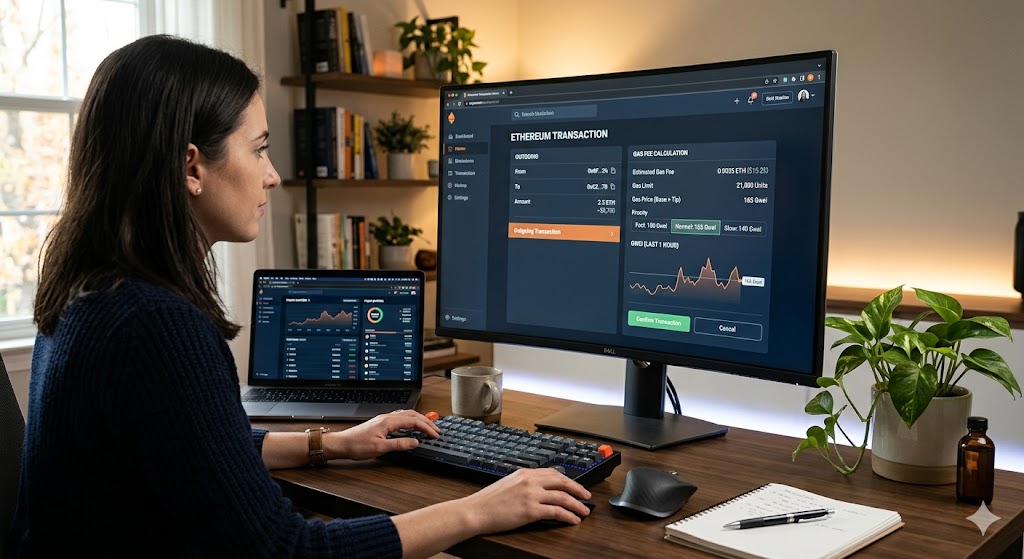
Gas fees are transaction costs paid to process and validate operations on a blockchain network.
They are used to:
- Compensate network validators or miners
- Prioritize transactions in the network
- Prevent spam or excessive activity
Every action—sending crypto, swapping tokens, or using apps—requires a fee.
How Gas Fees Work
Gas fees depend on network activity and transaction complexity.
Key components include:
Gas limit
The maximum amount of computational work your transaction can use.
Gas price
The amount you pay per unit of gas, often influenced by demand.
Network congestion
Higher demand increases fees.
Basic gas fee concept
Fee = Gas\ Limit \times Gas\ Price
When the network is busy, users may increase gas price to prioritize their transactions.
Why Gas Fees Fluctuate

Gas fees are not fixed—they change constantly.
High demand
Popular NFT drops or market activity can increase fees.
Network capacity
Limited processing space leads to competition.
Transaction complexity
Smart contract interactions cost more than simple transfers.
Time of day
Usage patterns can affect congestion levels.
Understanding these factors helps explain why fees vary.
Gas Fees Across Different Networks
| Network Type | Typical Fees | Speed |
|---|---|---|
| Ethereum mainnet | Higher | Moderate |
| Layer 2 solutions | Lower | Faster |
| Alternative blockchains | Lower | Faster |
Different networks offer different balances between cost and performance.
Pro Insight
Gas fees are not just a cost—they’re also a signal. High fees often indicate strong network activity, which can reflect increased usage or demand for certain applications.
How to Reduce Gas Fees
You can take steps to lower your transaction costs.
Choose off-peak times
Fees are often lower when network activity is reduced.
Use Layer 2 solutions
These networks offer lower-cost transactions.
Adjust gas settings
Some wallets allow you to set custom fees.
Batch transactions when possible
Combine actions to reduce overall costs.
Small adjustments can make a noticeable difference over time.
Quick Tip
Before confirming a transaction, check the estimated gas fee. If it seems unusually high, waiting a few minutes can sometimes reduce the cost.
Real-World Micro Scenario
A user tries to swap tokens during a period of high network congestion and sees a high gas fee. Instead of proceeding immediately, they wait until activity decreases.
Later, they complete the same transaction at a significantly lower cost.
Timing can directly impact expenses.
Common Mistakes to Avoid
Gas fees can be confusing at first.
Ignoring fee estimates
Always review before confirming a transaction.
Setting gas too low
Transactions may fail or take a long time.
Using congested networks unnecessarily
Alternatives may be cheaper.
Overpaying for speed
Higher fees don’t always mean better outcomes.
Frequently Asked Questions
What are gas fees in simple terms?
They are transaction fees paid to process actions on a blockchain network.
Why are gas fees sometimes high?
They increase when network demand is high or transactions are complex.
Can I avoid gas fees?
Not entirely, but you can reduce them by choosing the right timing and network.
Are gas fees the same on all blockchains?
No, they vary depending on the network and its design.
What happens if I set gas too low?
Your transaction may be delayed or fail.
Conclusion
Gas fees are a fundamental part of blockchain transactions, reflecting both network demand and computational effort. While they can fluctuate, understanding how they work allows you to manage costs more effectively.
By choosing the right timing, network, and settings, you can navigate gas fees with greater confidence and efficiency.
Trusted U.S. Resources
https://www.sec.gov
https://www.investor.gov
https://www.cftc.gov
https://www.usa.gov
This article is for general informational purposes only and does not provide legal, financial, medical, or professional advice. Policies, rates, and regulations may change over time.