
 wewe
wewe 
Learn a practical futures trading strategy for 2026 with real examples, risk control, and a clean approach that avoids emotional mistakes.
A good futures trading strategy should do one thing first: keep you alive. Profits matter, but survival comes first. Futures markets move fast, and leverage can turn small mistakes into painful losses. However, with a clear plan, futures trading can become structured instead of stressful.
Many traders fail because they chase setups without rules. Still, the best strategies are often boring: defined entries, controlled risk, and exits that don’t rely on hope.
For example, a trader can win 6 out of 10 trades and still lose money if their losing trades are too large. That’s why strategy is not only about “signals.” It’s about risk structure.
What Makes a Futures Trading Strategy Actually Work
A real strategy isn’t just a chart pattern. It includes:
- when you enter
- where you exit if wrong
- where you take profit
- how much you risk per trade
- when you stop trading
If one of these pieces is missing, the strategy becomes emotional.
If you’re trading leveraged products, it helps to understand cross vs isolated margin and funding rates because they affect futures performance, especially in crypto markets.
The Core Setup Trend Pullback With Confirmation
This is one of the cleanest futures strategies because it trades with the trend instead of fighting it.
Step 1 Find the trend
You want price making:
- higher highs and higher lows (uptrend)
- lower highs and lower lows (downtrend)
Trend trading works because you’re not forcing a reversal.
Step 2 Wait for a pullback
Instead of buying the top, wait for price to pull back into a key area:
- prior support or resistance
- moving average zone
- previous breakout level
This reduces chasing.
Step 3 Confirm the bounce or rejection
Look for a clear signal that the pullback is ending, such as:
- strong rejection candle
- momentum shift
- breakout of a small structure
Real-life micro-scenario:
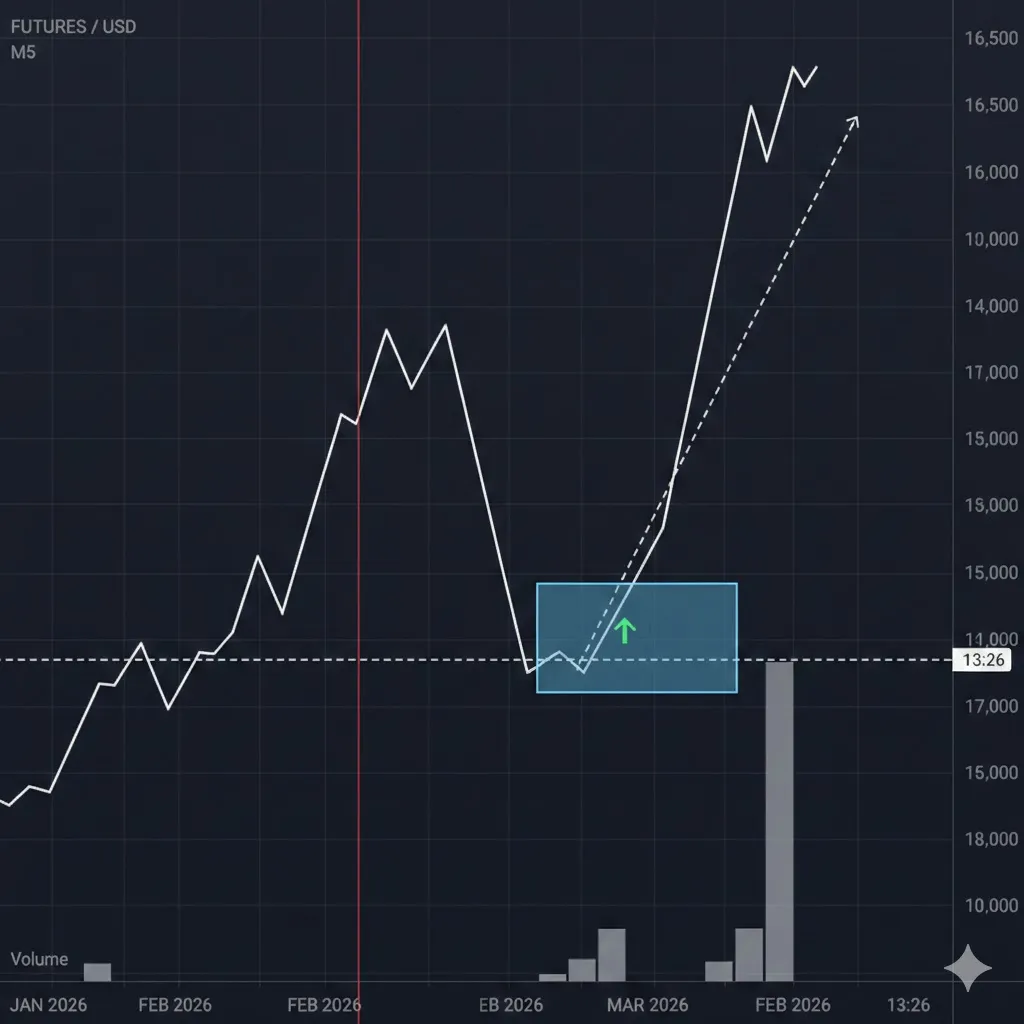
A trader sees Nasdaq futures trending upward. Price pulls back to a prior breakout level and prints a strong bullish candle. The trader enters with a tight stop below the support. It’s a calm entry because risk is defined.
Risk Management Rules That Protect the Strategy
Futures trading is leverage trading. Therefore, risk rules matter more than entry signals.
Risk 1% or less per trade
Many traders risk too much because futures move quickly. Keeping risk small gives you room to learn.
Always use a stop-loss
Without a stop, a futures position can spiral fast. A stop-loss is not pessimism. It’s structure.
Don’t widen the stop
If the trade is wrong, accept it. Widening stops often turns small losses into account damage.
Set a daily loss limit
A good rule is to stop trading after a certain loss amount or number of losing trades.
If you want a clean structure, using a trading risk plan can keep you consistent.
Futures Trading Strategy Comparison Table
| Strategy Style | Best Market Condition | Difficulty | Risk Level |
|---|---|---|---|
| Trend pullback | Trending markets | Medium | Moderate |
| Breakout chasing | High volatility | High | High |
| Mean reversion | Range-bound markets | Medium | Moderate |
| News trading | Major events | Very high | Very high |
This table shows why trend pullback strategies are popular: they reduce chaos and improve decision clarity.
How to Place Entries and Exits Without Guessing
A strategy needs repeatable rules.
Entry
Enter only after confirmation. That keeps you from buying the pullback too early.
Stop-loss
Place the stop where your idea is invalidated, not where it “feels safe.”
Take profit
Use one of these approaches:
- target the next resistance/support
- use a fixed risk-to-reward like 1:2
- scale out partially and trail the rest
Real-life micro-scenario:
A trader risks $100 per trade. They aim for $200 profit targets. Even with a 40–50% win rate, the math can work if losses stay controlled.
Pro Insight
Many futures traders improve results not by finding better entries, but by cutting losing trades faster and avoiding re-entry right after a stop-out.
Mistakes That Destroy Futures Traders
Overtrading
Futures markets offer endless opportunities. Still, trading too often increases mistakes and fees.
High leverage too early
New traders often use high leverage because it looks exciting. However, it removes your margin for error.
Trading without a plan
If your entry depends on feelings, your exit will too.
Revenge trading
After a loss, traders often try to “win it back.” That’s how small losses become big ones.
If you want to avoid emotional trading, a high risk trading guide can help you recognize common traps.
Quick Tip
If you take two losses in a row, pause for at least 30 minutes. This stops revenge trading before it starts.
FAQs About Futures Trading Strategy
What is the best futures trading strategy for beginners?
Trend pullback strategies are often easier because they trade with momentum and offer clearer stop-loss placement.
How much money do I need to trade futures?
It depends on the market and broker. However, risk control matters more than account size.
Is futures trading risky?
Yes. Futures are leveraged instruments and can move quickly. Risk management is essential.
Should I trade futures every day?
Not necessarily. Many traders perform better by trading fewer high-quality setups.
Do futures strategies work in crypto futures too?
Many concepts carry over, but crypto volatility and funding fees can change outcomes.
Disclaimer
Trading involves risk and may result in losses. This article is for general informational purposes only and does not provide financial or investment advice. Always trade based on your own risk tolerance.