
 wewe
wewe 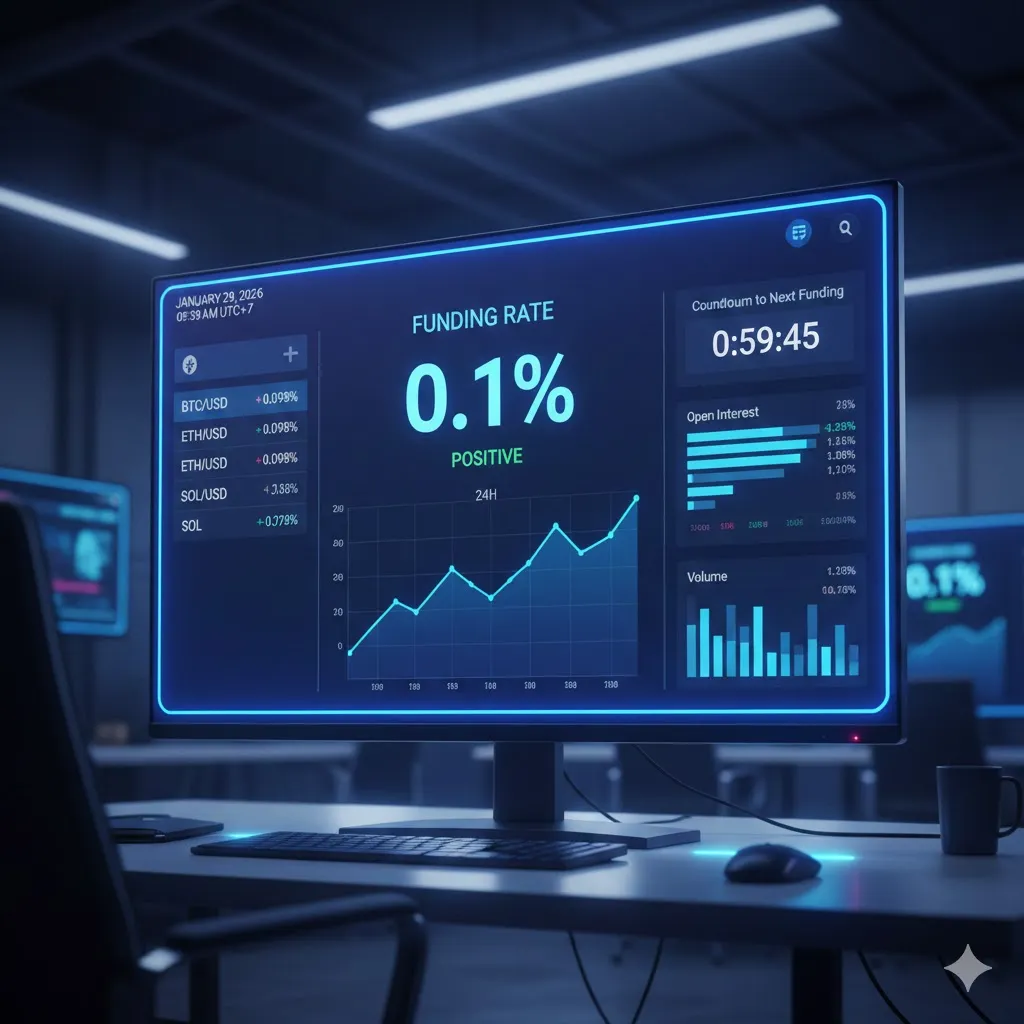
A clear explanation of funding rate crypto, how it works, and why it matters for understanding futures market sentiment in 2026.
Funding rate crypto is one of those metrics many traders see every day—but few truly understand. It quietly operates in the background of perpetual futures markets, influencing trader behavior without making headlines.
In 2026, as derivatives trading continues to dominate crypto volume, funding rates have become an essential signal for reading market sentiment, not just price direction.
What Funding Rate Crypto Actually Means
The funding rate is a periodic payment exchanged between traders in perpetual futures contracts. Unlike traditional futures, perpetual contracts don’t expire. Funding rates exist to keep the contract price aligned with the spot market.
When funding rates are positive, long traders pay short traders. This usually means the market is overly bullish. When funding rates turn negative, shorts pay longs—often signaling bearish sentiment.

For example, if Bitcoin perpetual futures trade above spot price for a prolonged period, funding rates rise to incentivize balance. This mechanism helps prevent extreme price divergence.
Why Funding Rates Matter More Than Price Alone
Price shows movement. Funding rates show pressure.
Imagine a scenario where prices move sideways, yet funding rates stay highly positive. This suggests traders are aggressively long, even without upward momentum. In many cases, that imbalance precedes sharp corrections.
Because of this, funding rates are often analyzed alongside on-chain data and open interest to understand whether a trend is healthy or overcrowded.
How Funding Rates Reflect Market Sentiment
Funding rates don’t predict direction—but they reveal positioning.
High Positive Funding Rates
This usually indicates excessive optimism. Too many traders are long, increasing the risk of long liquidations if price drops suddenly.
Deep Negative Funding Rates
This often reflects fear or strong bearish positioning. In some cases, it sets the stage for short squeezes if price moves up unexpectedly.
Neutral or Flat Funding
Balanced funding suggests a healthier, less emotional market environment.
Funding Rate Crypto vs Other Market Indicators
| Indicator | What It Shows | Best Use Case |
|---|---|---|
| Funding Rate | Trader positioning bias | Sentiment & crowd behavior |
| Price Action | Market movement | Trend confirmation |
| Open Interest | Capital committed | Leverage intensity |
| On-Chain Metrics | Actual asset movement | Structural insight |
This comparison highlights why funding rates work best as context, not standalone signals.
How Traders Use Funding Rates in Practice
Professional traders often watch funding rates to avoid crowded trades. If funding becomes extreme, they may reduce exposure or hedge—even if price trends look strong.
Retail traders use funding rates more defensively. For instance, someone holding a long position may reassess risk when funding stays elevated for several days.
In institutional research, funding rates are also studied to assess systemic leverage and potential liquidation risk during volatile periods.
Disclaimer
This content is for informational purposes only and does not constitute financial or investment advice. Funding rates do not guarantee market outcomes.
Pro Insight
Funding rates become most useful at extremes. Mild fluctuations are normal—persistent imbalance is what deserves attention.
Quick Tip
Always compare funding rates across multiple exchanges. Differences can reveal hidden leverage or arbitrage pressure.
Common Misunderstandings About Funding Rates
A common mistake is assuming positive funding means price must fall. In reality, strong trends can sustain positive funding for long periods.
Another misconception is treating funding rates as predictive. They describe current positioning, not future certainty.
FAQs About Funding Rate Crypto
How often are funding rates paid?
Typically every 8 hours, but it varies by exchange.
Do all crypto trades have funding rates?
No. Funding rates apply mainly to perpetual futures, not spot trades.
Can funding rates affect profits?
Yes. Over time, funding payments can significantly impact returns.
Are funding rates the same on all exchanges?
No. Each exchange calculates funding slightly differently.
Should beginners trade based on funding rates?
They’re best used as a supporting indicator, not a sole strategy.
Conclusion
Funding rate crypto metrics offer a powerful glimpse into trader psychology. They show whether markets are calm, euphoric, or fearful—often before price reacts.
When combined with price action and on-chain data, funding rates help traders navigate leveraged markets with more awareness. In a landscape driven by derivatives, understanding funding rates is no longer optional—it’s essential.
U.S. Trusted Resources
- U.S. Securities and Exchange Commission – Crypto Asset Markets
https://www.sec.gov - Commodity Futures Trading Commission (CFTC) – Derivatives Oversight
https://www.cftc.gov - MIT Digital Currency Initiative
https://dci.mit.edu - Federal Trade Commission – Crypto Risk Education
https://www.ftc.gov