

 wewe
wewe 
Understand exchange inflows, what they indicate, how to read them, and why they matter for crypto market behavior.
In crypto markets, price moves often grab attention—but exchange inflows quietly explain why those moves happen. When large amounts of crypto flow into exchanges, it can reveal intent before charts react.
Traders, analysts, and long-term investors watch this metric closely because it often precedes volatility, trend shifts, or sentiment changes that price alone can’t explain.
What Exchange Inflows Actually Measure
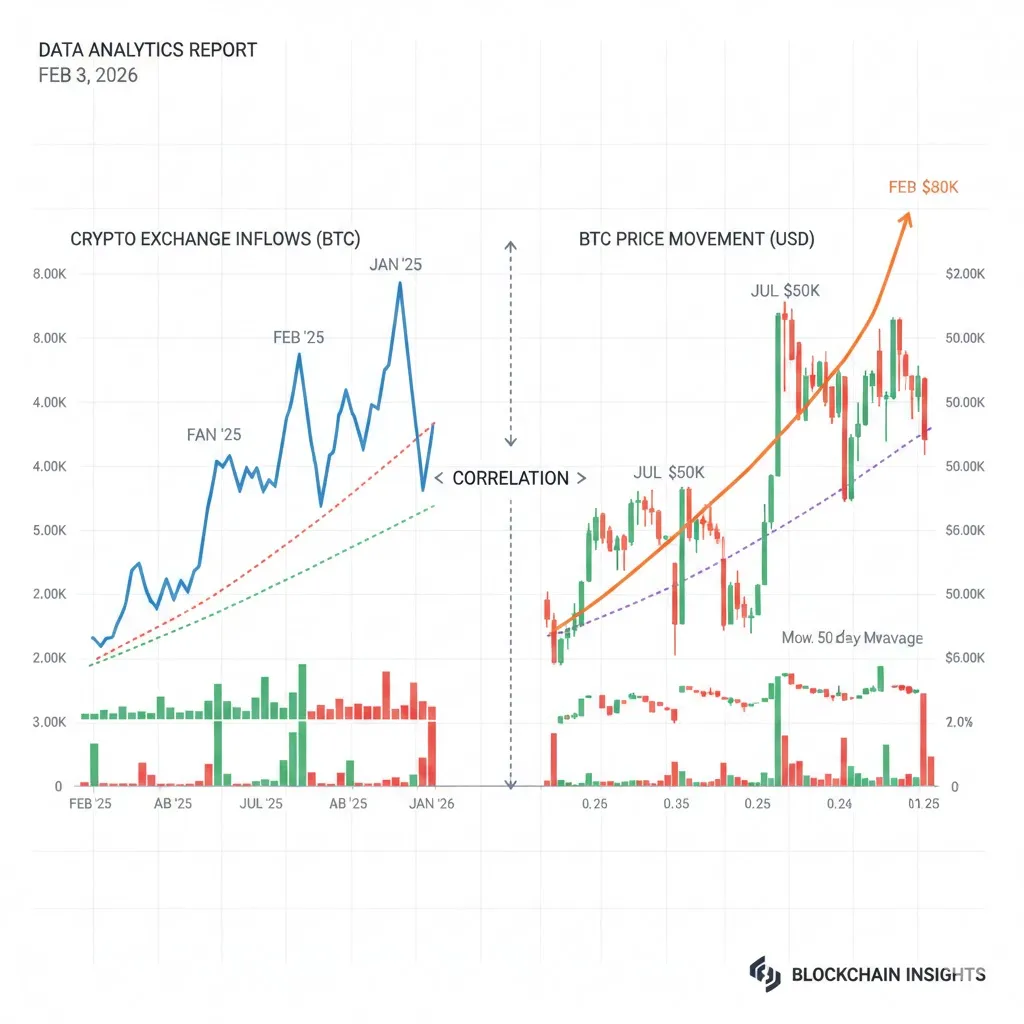
Exchange inflows track the amount of cryptocurrency transferred from private wallets into centralized exchanges over a given period. These movements are visible on-chain and aggregated by analytics platforms.
Why does this matter? Assets moved to exchanges are typically preparing to be traded. While not every inflow leads to selling, increased inflows often raise the probability of market activity.
Imagine a quiet market week—then a sudden spike in inflows from large wallets. Even before prices move, analysts know something is likely brewing.
Why Exchange Inflows Matter More Than Price Alone
Price shows what happened. Inflows hint at what might happen next.
Rising exchange inflows can signal potential selling pressure, profit-taking, or portfolio rebalancing. Meanwhile, low or declining inflows may suggest investors are holding assets off exchanges, often associated with longer-term conviction.
For example, during uncertain macro events, inflows tend to rise as investors move assets closer to liquidity. That shift alone can change market dynamics—even if prices haven’t reacted yet.
Exchange Inflows vs Market Behavior
| Inflow Trend | Typical Interpretation | Market Context | Risk Signal |
|---|---|---|---|
| Sharp increase | Potential selling pressure | Volatile periods | Elevated |
| Gradual increase | Rebalancing or hedging | Transitional markets | Moderate |
| Flat or declining | Holding behavior | Accumulation phases | Low |
| Sudden spike from large wallets | Whale activity | News-driven events | High |
| Exchange-specific inflows | Platform-related trades | Arbitrage or listings | Contextual |
This comparison helps separate routine movements from signals that deserve attention.
How Investors Use Exchange Inflows in Practice
Professional traders rarely rely on inflows alone. Instead, they combine them with price trends, derivatives data, and broader sentiment.
A real-world scenario: prices trend upward, but exchange inflows begin climbing rapidly. That divergence can suggest profit-taking ahead, prompting cautious positioning. Conversely, falling inflows during price consolidation may hint at accumulation beneath the surface.
Context is everything—and inflows provide that context.
Common Mistakes When Interpreting Inflows
One of the biggest errors is assuming every inflow equals immediate selling. Assets can move to exchanges for many reasons: collateral, arbitrage, or internal transfers.
Another mistake is ignoring which exchange receives the inflow. Different platforms attract different types of traders, and that nuance can change interpretation entirely.

Disclaimer
This article is for general informational purposes only and does not constitute financial, investment, or trading advice. Always conduct independent research before making decisions.
Pro Insight
Exchange inflows become far more powerful when analyzed by wallet size. Whale-driven inflows often carry different implications than retail activity.
Quick Tip
Track exchange inflows alongside outflows—net flow provides clearer insight than either metric alone.
Frequently Asked Questions
What are exchange inflows in crypto?
They measure how much cryptocurrency moves from wallets into exchanges over time.
Do exchange inflows always mean selling?
No. They indicate readiness for trading, not guaranteed selling.
Are inflows useful for long-term investors?
Yes. They help identify periods of distribution or accumulation.
Which assets rely most on inflow analysis?
Highly liquid assets like Bitcoin and Ethereum show the clearest signals.
How often should inflows be checked?
Traders monitor daily; long-term investors often review weekly trends.
Conclusion
Exchange inflows are one of the most revealing on-chain signals in crypto markets. They don’t predict price—but they explain intent, liquidity shifts, and behavioral changes before price reacts.
When combined with broader context, inflows help investors move from reactive decisions to informed strategy.
Trusted U.S. Resources
U.S. Securities and Exchange Commission — Digital Asset Markets
https://www.sec.gov
Commodity Futures Trading Commission — Crypto Market Oversight
https://www.cftc.gov
CoinDesk Research — On-Chain Metrics
https://www.coindesk.com/research