

 wewe
wewe Learn how a DCA bot works, when it helps, key risks, and how traders automate steady entries with discipline.
Trying to time perfect entries is exhausting—and usually expensive. A DCA bot removes that pressure by automating steady buys over time, turning volatility into a process instead of a problem.
Rather than predicting bottoms, DCA automation focuses on consistency. It’s popular with long-term investors and cautious traders who want exposure without constant chart-watching.
What a DCA Bot Actually Does
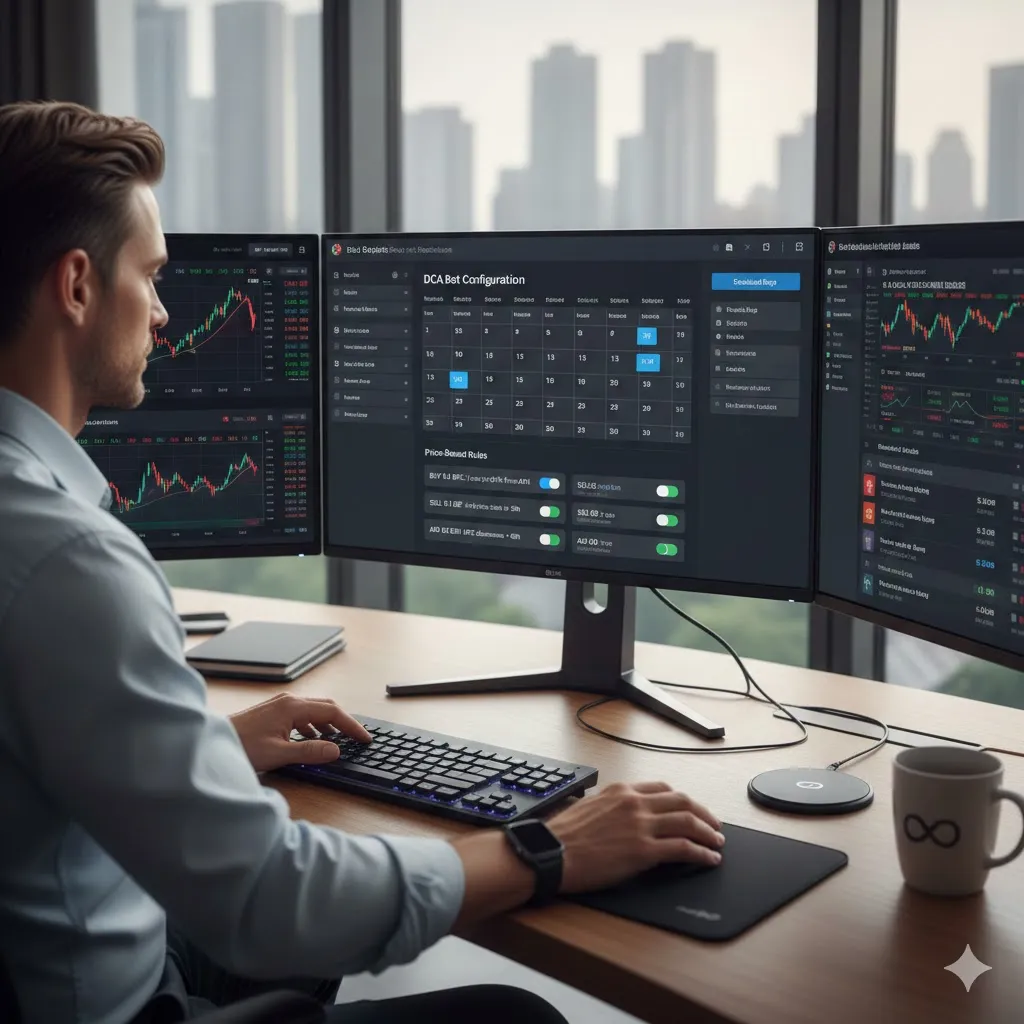
A DCA (Dollar-Cost Averaging) bot places recurring buy orders based on time intervals, price drops, or predefined conditions. The goal is to average the entry price over multiple purchases instead of betting on a single moment.
Picture a market that swings weekly. A DCA bot keeps buying small amounts during dips and calm periods alike. Over time, the average entry smooths out—often reducing regret and emotional decisions.
When a DCA Bot Works Best
DCA bots shine in volatile or uncertain markets where timing is difficult. They’re especially useful for accumulating assets you believe in long term.
However, they’re not magic. In prolonged downtrends, a DCA bot will continue buying—improving the average price but increasing exposure. That’s why limits and guardrails matter.
Core Settings That Define a DCA Bot
A DCA bot’s behavior depends on a few key parameters:
Buy trigger can be time-based, price-based, or both.
Order size controls risk per entry.
Maximum allocation caps total exposure.
Take-profit rules optionally lock gains after rebounds.
Small tweaks can change outcomes dramatically, so clarity beats complexity.

DCA Bot vs Other Bot Strategies
| Strategy | Best For | Strength | Main Risk |
|---|---|---|---|
| DCA bot | Long-term accumulation | Smooth entries | Extended downtrends |
| Grid bot | Sideways markets | Frequent trades | Breakouts |
| Trend-following bot | Strong trends | Captures momentum | Whipsaws |
| Signal-based bot | Mixed conditions | Rule-based timing | False signals |
| Manual buying | Discretionary | Flexibility | Emotional errors |
This comparison shows why DCA bots favor patience over precision.
Risk Controls That Keep DCA Sensible
Without limits, DCA can quietly overcommit capital. Sensible setups define a maximum spend, pause buys during extreme volatility, and avoid leverage.
Some users also pair DCA with partial profit-taking after rebounds—reducing exposure while keeping the strategy intact.

Disclaimer
This article is for general informational purposes only and does not constitute financial or investment advice. Crypto markets are volatile and losses are possible. Always assess risk carefully.
Pro Insight
DCA bots work best when aligned with conviction. Automating entries into assets you don’t truly want to hold long term magnifies stress during drawdowns.
Quick Tip
Start with the smallest order size you’re comfortable with—observe behavior across volatility before scaling.
Frequently Asked Questions
What is a DCA bot?
It’s an automated tool that buys assets in small increments over time to average entry price.
Are DCA bots profitable?
They can be effective for long-term accumulation, but results depend on market conditions and risk limits.
Do DCA bots require leverage?
No. Using leverage increases risk and is unnecessary for DCA strategies.
Can a DCA bot sell automatically?
Some setups include take-profit rules, but many are buy-only by design.
Is DCA better than buying all at once?
DCA reduces timing risk, but lump-sum buying can outperform in strong uptrends.
Conclusion
A DCA bot replaces guesswork with discipline. By spreading entries over time, it helps investors stay consistent through volatility—without staring at charts or reacting emotionally.
When paired with clear limits and realistic expectations, DCA automation becomes a steady ally for long-term positioning.
Trusted U.S. Resources
U.S. Securities and Exchange Commission — Investor Education
https://www.sec.gov
FINRA — Automated Investing Risks
https://www.finra.org
Commodity Futures Trading Commission — Customer Advisories
https://www.cftc.gov