
 wewe
wewe 
Altcoin investing refers to investing in cryptocurrencies other than Bitcoin. These digital assets often represent a wide range of use cases, from decentralized finance and smart contracts to gaming and data storage.
For many investors, altcoins offer exposure to emerging technologies and innovation within the broader blockchain ecosystem. At the same time, they tend to carry higher volatility and uncertainty compared to more established assets.
Understanding how altcoin investing works can help investors approach the market with clearer expectations and a more structured strategy.
What Altcoins Are and Why They Matter
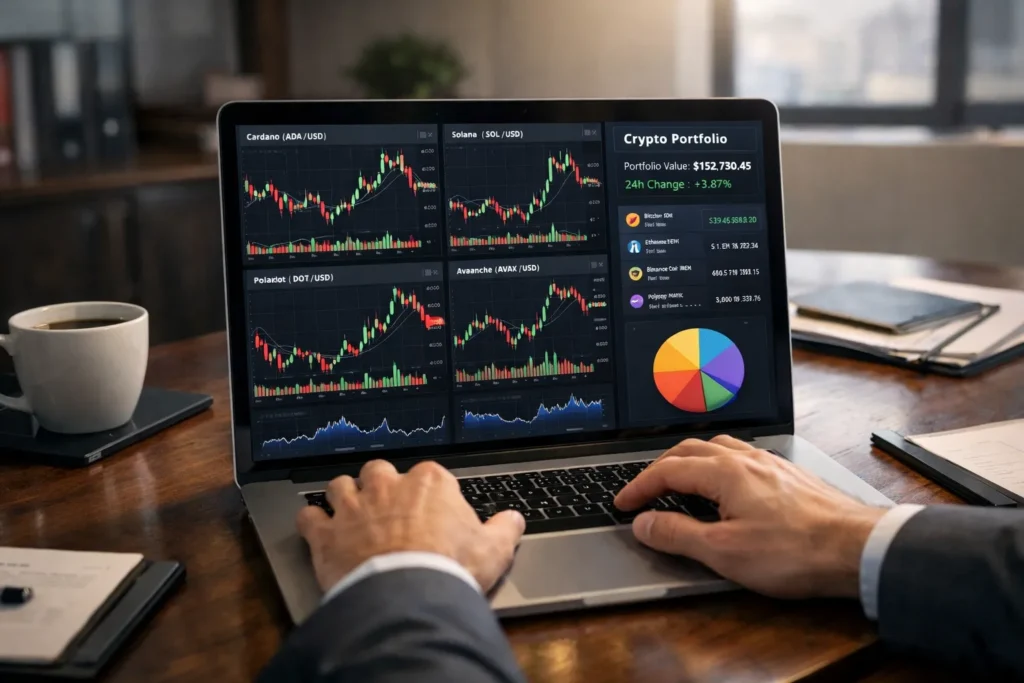
Altcoins include all cryptocurrencies outside of Bitcoin. Ethereum is the most widely recognized example, but there are thousands of altcoins with different functions and goals.
These projects often aim to solve specific problems, such as:
- Enabling decentralized applications
- Improving transaction speed and scalability
- Supporting digital finance platforms
- Providing specialized blockchain services
Because altcoins focus on diverse use cases, they can offer opportunities for growth tied to technological development rather than simple price speculation.
However, not all projects succeed, which makes research an important part of the process.
Types of Altcoins in the Market
Altcoins are not all the same. They fall into several categories based on their purpose and design.
| Altcoin Type | Primary Use | Example Purpose |
|---|---|---|
| Platform Tokens | Smart contracts | Decentralized applications |
| Stablecoins | Price stability | Payments and transfers |
| Utility Tokens | Access to services | Platform usage |
| Governance Tokens | Voting rights | Protocol decisions |
Each category serves a different function within the blockchain ecosystem. Understanding these distinctions helps investors evaluate how a project fits into the broader market.
How Altcoin Investing Works
Altcoin investing typically involves buying and holding digital assets through cryptocurrency exchanges or digital wallets.
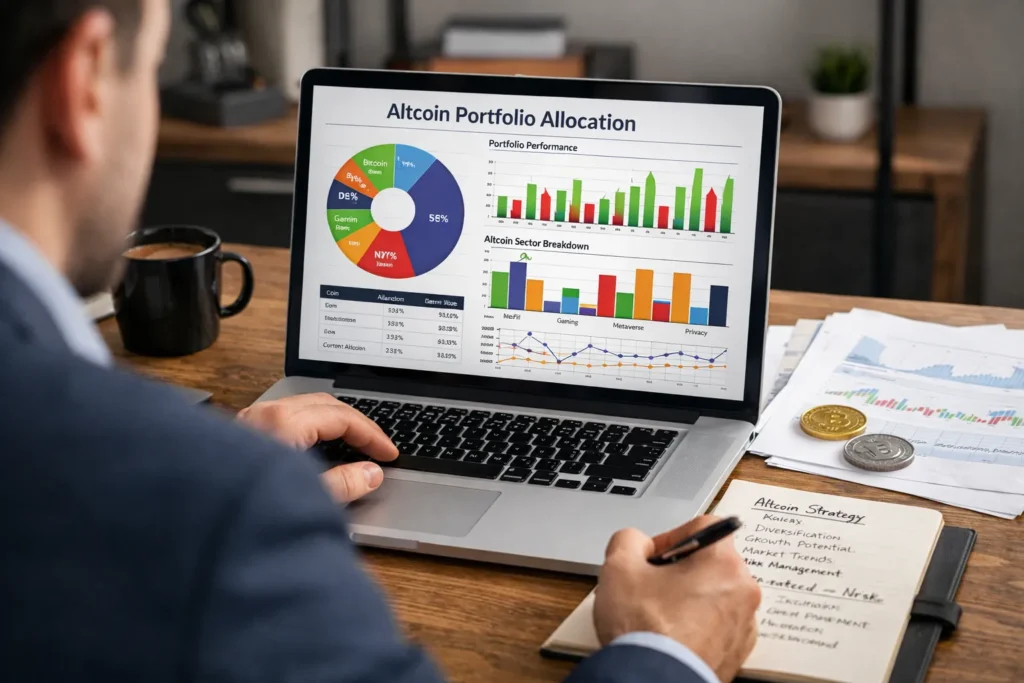
Investors often approach altcoins with different strategies:
- Long-term holding based on project fundamentals
- Gradual accumulation over time
- Diversifying across multiple projects
- Monitoring development updates and adoption trends
For example, an investor may allocate a portion of their portfolio to established altcoins while exploring smaller projects with emerging use cases.
This type of allocation helps balance potential growth with risk exposure.
Key Factors to Evaluate Before Investing
Evaluating altcoins requires looking beyond price movements.
Important considerations include:
Project fundamentals
Understanding what problem the project aims to solve.
Development activity
Active development teams often indicate ongoing progress.
Adoption and usage
Real-world use cases and user growth can influence long-term value.
Market position
Established projects may offer more stability compared to newer ones.
These factors help investors assess whether a project has long-term potential.
Risks of Altcoin Investing
Altcoin markets are known for higher volatility compared with more established assets.
Price fluctuations
Altcoin prices can change rapidly in short periods.
Project uncertainty
Some projects may not achieve long-term adoption.
Liquidity differences
Smaller altcoins may have lower trading volume.
Market sentiment shifts
Investor perception can change quickly.
Because of these risks, many investors approach altcoins as part of a diversified portfolio rather than a standalone strategy.
Pro Insight
Experienced investors often allocate only a small portion of their overall portfolio to altcoins while maintaining exposure to more established assets. This approach allows participation in potential growth opportunities while managing overall risk.
Balancing exposure can help maintain stability during market fluctuations.
Building an Altcoin Portfolio
A structured altcoin portfolio may include a mix of different project types.
Some investors consider:
- Established altcoins with larger market presence
- Mid-sized projects with active development
- Smaller projects with emerging use cases
Diversification helps reduce reliance on a single project’s performance.
Regular portfolio reviews can also help ensure investments align with long-term goals.
Quick Tip
Before investing in any altcoin, review the project’s documentation, development roadmap, and community activity. These sources often provide insight into the project’s direction and potential sustainability.
Frequently Asked Questions
What is the difference between Bitcoin and altcoins?
Bitcoin is the first and most established cryptocurrency, while altcoins include all other digital assets with varying use cases and technologies.
Are altcoins riskier than Bitcoin?
Altcoins often carry higher risk due to lower market maturity, smaller adoption, and higher volatility.
Can beginners invest in altcoins?
Beginners can participate, but researching projects and understanding risks is essential before investing.
How many altcoins should be in a portfolio?
There is no fixed number. Many investors diversify across several projects to spread risk.
Do all altcoins have long-term potential?
Not all projects succeed. Evaluating fundamentals and adoption trends helps identify more sustainable opportunities.
Conclusion
Altcoin investing offers exposure to a wide range of blockchain innovations beyond Bitcoin. While these assets can present growth opportunities, they also involve higher levels of uncertainty and market volatility.
By focusing on research, diversification, and long-term perspective, investors can approach altcoin markets with greater awareness and balance.
Understanding both the opportunities and risks is key to building a thoughtful and sustainable investment strategy.
Trusted U.S. Resources
https://www.sec.gov
https://www.investor.gov
https://www.consumerfinance.gov
https://www.usa.gov
This article is for general informational purposes only and does not provide legal, financial, medical, or professional advice. Policies, rates, and regulations may change over time.