
 wewe
wewe 
Altcoin investing has matured. In 2025, it’s no longer just about chasing the next hype cycle or scrolling social media for “moon picks.” Today’s altcoin market is bigger, more structured, and—at times—far more unforgiving.
Still, opportunity exists. It just looks different now.
If Bitcoin is often viewed as digital gold, altcoins are closer to early-stage businesses: innovative, volatile, and highly selective. Some fail quietly. Others reshape entire sectors. Knowing the difference is the real skill.
Disclaimer: This article is for educational purposes only and does not provide financial, investment, tax, or legal advice. Cryptocurrency investing involves risk, including loss of capital.
What Altcoin Investing Really Means in 2025
Altcoins are cryptocurrencies other than Bitcoin. That definition hasn’t changed—but what altcoins do has.
In 2025, altcoin investing often revolves around:
- Blockchain infrastructure (layer-1 and layer-2 networks)
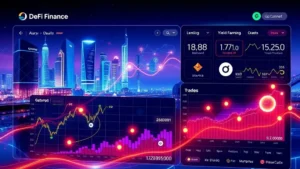
- Decentralized finance (DeFi)
- Gaming, AI, and real-world asset tokenization
- Stablecoin and payment ecosystems
Instead of asking “Is this coin cheap?”, investors increasingly ask:
- Does this network solve a real problem?
- Is there actual usage?
- Can it survive multiple market cycles?
A small but telling example:
During market pullbacks, many speculative tokens fade fast. Meanwhile, altcoins with active users and developer ecosystems tend to recover first.
Altcoin investing today is less about speed—and more about selection.
Why Investors Still Look Beyond Bitcoin
Bitcoin remains the benchmark. But altcoins attract investors for reasons Bitcoin simply can’t offer.
Higher growth potential
Smaller market caps mean more upside—at least in theory.
Sector-specific exposure
Altcoins allow investors to target themes like DeFi, gaming, AI integration, or blockchain infrastructure.
Innovation happens faster
Most experimentation in crypto happens outside Bitcoin.
That said, higher potential returns come with higher risk. Many altcoins never recover from bear markets. Others quietly outperform for years.
Altcoin investing is less forgiving—but often more rewarding for disciplined investors.
The Main Types of Altcoins Investors Focus On
Understanding categories matters more than memorizing token names.
Layer-1 Blockchains
These are base networks that support applications and smart contracts. Performance, security, and developer adoption are key factors.
Layer-2 and Scaling Solutions
Built on top of larger blockchains, these aim to reduce fees and improve speed. Adoption tends to follow real usage.
DeFi Tokens
These power decentralized exchanges, lending platforms, and yield protocols. Cash flow and sustainability matter more than hype.
Utility and Infrastructure Tokens
Often overlooked, these support data storage, oracle services, or cross-chain communication.
Speculative & Narrative-Driven Tokens
Gaming, AI-themed, or meme-adjacent tokens can surge quickly—but often fade just as fast.
Altcoin Investing vs Bitcoin Investing
Many investors eventually face this choice. Here’s how the two approaches differ in practice:
| Feature | Altcoin Investing | Bitcoin Investing |
|---|---|---|
| Volatility | Very High | Lower |
| Upside Potential | Higher | Moderate |
| Downside Risk | Higher | Lower |
| Complexity | High | Low |
| Long-Term Survivability | Selective | Strong |
Bitcoin prioritizes preservation. Altcoins prioritize expansion.
Most seasoned investors don’t choose one—they balance both.
How to Evaluate an Altcoin Without Getting Overwhelmed
Altcoin research doesn’t need to be complicated—but it must be intentional.
Use case clarity
If you can’t explain what the project does in one sentence, that’s a warning sign.
Active development
Consistent updates and community engagement matter more than marketing.
Token supply mechanics
Inflation, unlock schedules, and insider allocations affect long-term value.
Real usage metrics
Users, transactions, and integrations often matter more than price charts.
Market positioning
Ask whether the project is truly differentiated—or just one of many similar tokens.
Pro Insight
Experienced altcoin investors often allocate more capital to fewer high-conviction projects rather than spreading funds across dozens of speculative tokens.
Portfolio Allocation and Risk Management
This is where many altcoin investors struggle.
Because altcoins are volatile, position sizing matters more than entry price.
Common risk practices include:
- Limiting total altcoin exposure relative to Bitcoin
- Avoiding heavy concentration in one narrative
- Taking partial profits during strong rallies
- Accepting that not every pick will succeed
A realistic scenario:
One strong altcoin winner can offset several smaller losses—but only if position sizes are controlled.
Tax and Regulatory Considerations in the U.S.
Altcoin investing comes with tax responsibilities.
In general:
- Each trade may be a taxable event
- Short-term gains are often taxed as ordinary income
- Long-term holdings may receive different treatment
Regulatory clarity has improved, but compliance still matters.
Tax disclaimer: This is not tax advice. Cryptocurrency tax treatment varies by individual circumstances and state regulations.
Common Altcoin Investing Mistakes
These errors repeat every cycle.
Chasing hype late
By the time a token trends everywhere, risk is usually highest.
Ignoring token supply unlocks
Sudden increases in supply often pressure prices.
Over-diversifying
Owning too many low-quality tokens reduces focus and conviction.
Holding losers indefinitely
Belief isn’t a strategy. Conditions change.
Quick Tip
If an altcoin thesis no longer holds, reassess objectively. Opportunity cost matters just as much as losses.
Who Altcoin Investing Is Best Suited For
Altcoin investing tends to fit:
- Investors comfortable with volatility
- Those willing to research deeply
- Long-term thinkers with disciplined risk controls
- Investors seeking growth beyond Bitcoin
It’s usually not ideal for:
- Short-term income seekers
- Low-risk portfolios
- Investors who can’t monitor markets periodically
Frequently Asked Questions About Altcoin Investing
Is altcoin investing risky in 2025?
Yes. Altcoins are significantly more volatile than Bitcoin and carry higher failure risk.
Can altcoins outperform Bitcoin?
Some can, especially during strong market cycles, but many underperform or disappear.
How many altcoins should I own?
There’s no universal number. Many investors prefer fewer, higher-quality positions.
Are altcoins regulated in the U.S.?
Some oversight exists, but regulation varies by asset and continues to evolve.
Should beginners invest in altcoins?
Beginners can, but starting with small allocations and strong education is critical.
Conclusion: Altcoin Investing With Patience and Perspective
Altcoin investing in 2025 rewards clarity—not noise. The market is no longer forgiving to shallow research or blind speculation. But for investors willing to learn, evaluate, and manage risk, opportunities still exist beyond Bitcoin.
The goal isn’t to own everything.
It’s to own the right things—for the right reasons—at the right size.
In altcoin investing, survival is success. Growth comes next.
Authoritative Sources
- U.S. Securities and Exchange Commission — usa.gov
- Consumer Financial Protection Bureau — consumerfinance.gov
- Internal Revenue Service (Virtual Currency Guidance) — irs.gov
- U.S. Census Bureau — census.gov