

 wewe
wewe 
AI crypto trading has surged in popularity as investors look for smarter ways to navigate volatile digital asset markets. In 2026, artificial intelligence tools analyze massive datasets — price movements, blockchain activity, social sentiment, and macro trends — faster than any human trader could.
However, AI does not eliminate risk. It enhances analysis and automation. Understanding how AI crypto trading works — and where its limits lie — is critical before committing capital.
This article is for general informational purposes only and does not provide legal, financial, medical, or professional advice. Policies, rates, and regulations may change over time.
What Is AI Crypto Trading?
AI crypto trading uses machine learning algorithms and data models to identify trading opportunities in cryptocurrency markets.
Instead of manually watching charts, AI systems can:
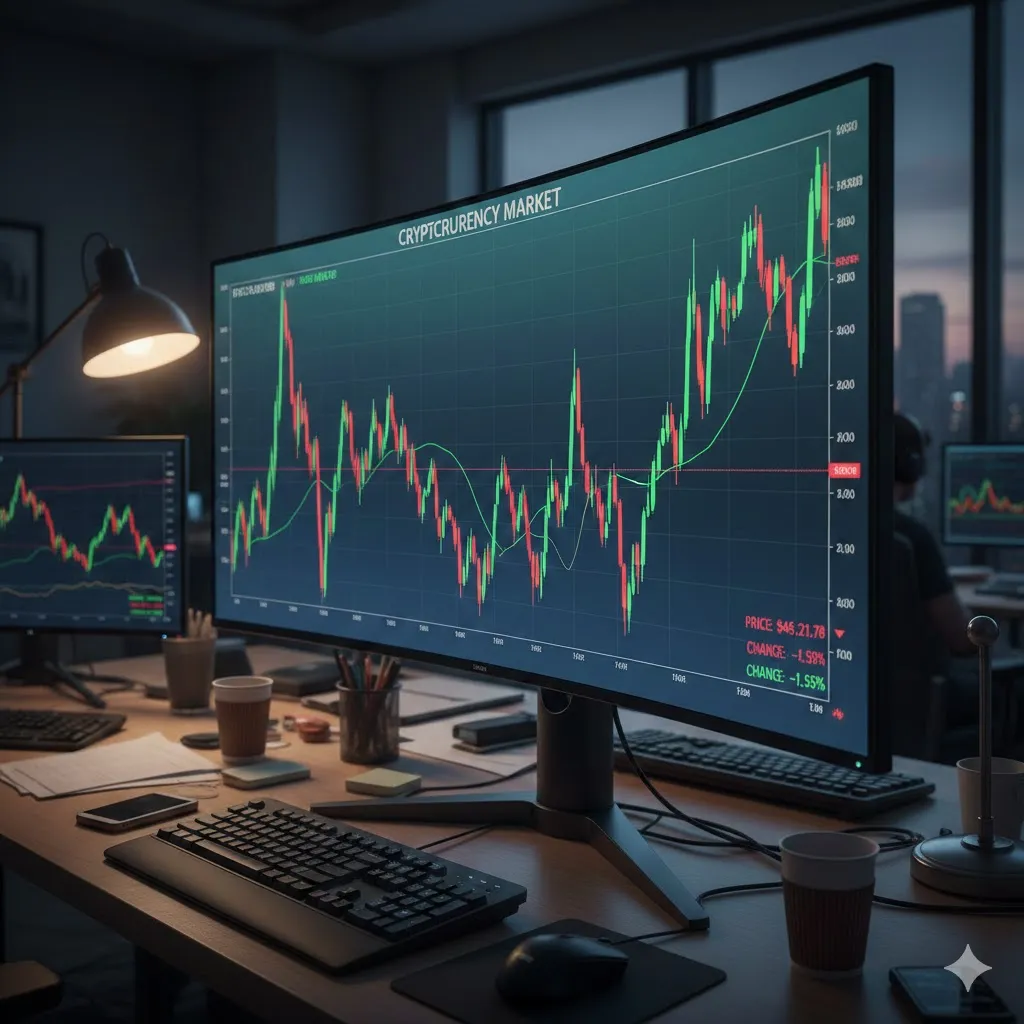
- Analyze price trends in real time
- Detect unusual trading volume
- Monitor blockchain transaction patterns
- Track social media sentiment shifts
- Execute trades automatically
For example, an AI model might detect increased wallet accumulation activity combined with rising volume — signaling potential upward momentum.

How AI Improves Crypto Market Analysis
Cryptocurrency markets operate 24/7. Human traders cannot monitor them continuously. AI systems offer several advantages.
Speed and Automation
Algorithms react instantly to data inputs without emotional hesitation.
Pattern Recognition
Machine learning models detect subtle correlations between variables that may not be obvious to human analysts.
Backtesting Capabilities
AI models can test strategies against historical data to evaluate risk and potential performance.
| AI Function | Benefit | Risk If Misused |
|---|---|---|
| Real-Time Analysis | Faster trade execution | Overtrading |
| Sentiment Tracking | Market mood insights | False signals |
| Predictive Modeling | Probability forecasting | Overfitting |
| Automated Execution | 24/7 operation | Lack of manual oversight |
While AI increases efficiency, oversight remains essential.
Common AI Crypto Trading Strategies
Momentum Trading
AI identifies rapid upward or downward price trends and enters trades accordingly.
Arbitrage
Algorithms detect price differences between exchanges and execute trades instantly.
Mean Reversion
Models predict when crypto prices deviate significantly from historical averages.
Sentiment-Based Trading
AI analyzes social platforms and news feeds to anticipate market reactions.
For instance, sudden spikes in online mentions of a specific token combined with increased trading volume may trigger short-term momentum trades.
Pro Insight
The strongest AI crypto trading systems combine risk controls with automation. Position sizing limits and stop-loss logic are essential to protect capital during high volatility.
Risks of AI Crypto Trading
AI systems are powerful — but not infallible.
Market Volatility
Cryptocurrency prices can swing dramatically within minutes.
Overfitting
Models tuned too precisely to past data may fail in live markets.
Data Quality Issues
Incorrect or incomplete datasets weaken predictive reliability.
Regulatory Considerations
Crypto trading remains subject to evolving U.S. regulatory guidance from agencies such as the SEC and CFTC. Compliance awareness is important.
Quick Tip
Start with simulated or paper trading before deploying real capital. Testing live data in a controlled environment reduces initial risk exposure.
Frequently Asked Questions
Is AI crypto trading fully automated?
It can be, but many traders combine AI signals with human oversight.
Can AI guarantee profits?
No. AI improves probability-based decision-making but cannot eliminate market risk.
Do I need programming skills?
Many platforms offer AI-powered tools without coding, though advanced customization often requires technical knowledge.
Is crypto trading regulated?
Yes. U.S. regulatory oversight continues evolving, particularly for exchanges and digital asset classifications.
How much capital is needed?
Capital requirements vary depending on strategy, platform, and risk tolerance.
Conclusion
AI crypto trading in 2026 offers advanced tools for navigating fast-moving digital markets. By combining real-time analysis, machine learning, and disciplined risk management, traders aim to improve decision-making and reduce emotional bias.
However, AI is not a shortcut to guaranteed profits. Success depends on structured strategy design, continuous monitoring, and responsible capital management.
Trusted U.S. Resources
U.S. Securities and Exchange Commission (SEC) – Digital Assets Guidance
https://www.sec.gov/
Commodity Futures Trading Commission (CFTC) – Cryptocurrency Education
https://www.cftc.gov/
Federal Trade Commission (FTC) – Crypto and Consumer Protection
https://consumer.ftc.gov/
National Institute of Standards and Technology (NIST) – Cybersecurity Framework
https://www.nist.gov/